







Greenhouse Gases: Navigating Their Impact on Climate Change
Introduction:
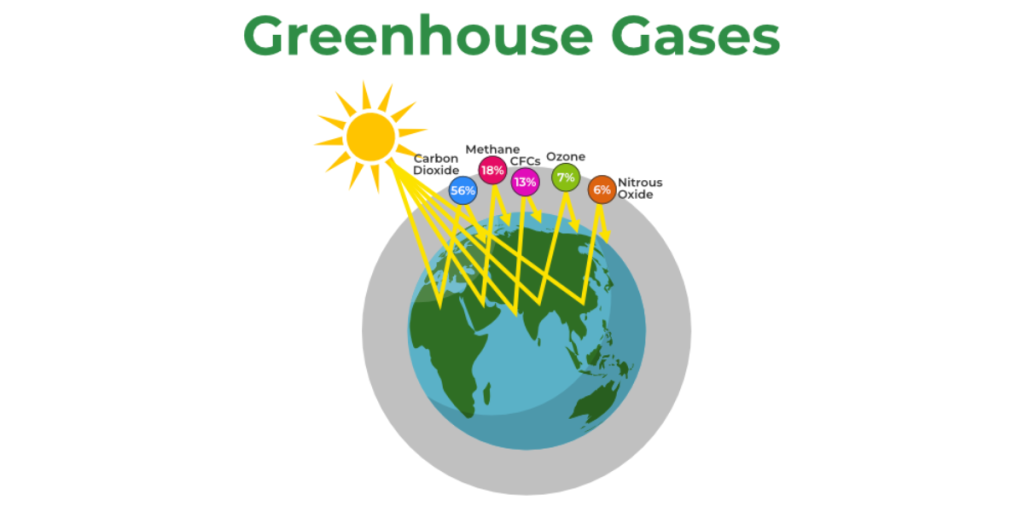
Greenhouse gases (GHGs) have become central figures in the discourse surrounding climate change, acting as both contributors to environmental challenges and indicators of the planet’s delicate balance. This comprehensive guide delves into the realm of greenhouse gases, exploring their nature, sources, role in the greenhouse effect, impact on climate change, and potential mitigation strategies. Understanding the dynamics of these gases is crucial for individuals, businesses, and policymakers as they navigate the complex landscape of environmental sustainability.
I. Greenhouse Gases: An Overview:
1. Definition of Greenhouse Gases:
Greenhouse gases are substances in the Earth’s atmosphere that trap heat, contributing to the greenhouse effect. They allow sunlight to enter but prevent some of the outgoing infrared radiation from escaping into space. The major greenhouse gases include carbon dioxide (CO2), methane (CH4), nitrous oxide (N2O), water vapor, ozone (O3), and fluorinated gases.
2. The Greenhouse Effect:
- Incoming solar radiation penetrates the Earth’s atmosphere, reaching the surface.
- The Earth absorbs and then re-emits this energy as infrared radiation.
- Greenhouse gases trap a portion of this radiation, preventing it from escaping into space and warming the planet.
3. Natural and Anthropogenic Sources:
- Natural Sources: Volcanic eruptions, wildfires, and natural decay processes contribute to the release of greenhouse gases.
- Anthropogenic Sources: Human activities, such as burning fossil fuels, deforestation, and industrial processes, significantly increase greenhouse gas concentrations.
II. Major Greenhouse Gases:
1. Carbon Dioxide (CO2):
- Sources: Fossil fuel combustion, deforestation, and industrial processes.
- Role: The primary contributor to human-induced climate change.
2. Methane (CH4):
- Sources: Livestock digestion, rice paddies, landfills, and natural gas extraction.
- Role: Has a higher warming potential than CO2 over shorter timeframes.
3. Nitrous Oxide (N2O):
- Sources: Agricultural activities, industrial processes, and burning fossil fuels.
- Role: Has a long atmospheric lifetime and contributes to both ozone depletion and global warming.
4. Water Vapor:
- Natural Source: Evaporation from oceans, lakes, and rivers.
- Role: While not directly influenced by human activities, water vapor amplifies the warming effect of other greenhouse gases.
5. Ozone (O3):
- Sources: Ground-level ozone results from chemical reactions between pollutants emitted by vehicles and industrial facilities.
- Role: High-altitude ozone forms the ozone layer, protecting the Earth from harmful ultraviolet radiation.
6. Fluorinated Gases:
- Sources: Synthetic gases used in industrial applications, such as hydrofluorocarbons (HFCs), perfluorocarbons (PFCs), sulfur hexafluoride (SF6), and nitrogen trifluoride (NF3).
- Role: Have high global warming potentials and long atmospheric lifetimes.
III. Impact of Greenhouse Gases on Climate Change:
1. Global Warming Potential (GWP):
- The GWP is a measure of how much heat a greenhouse gas traps in the atmosphere over a specific time period, usually 20, 100, or 500 years.
- Methane and nitrous oxide have higher GWPs than carbon dioxide over shorter timeframes.
2. Temperature Rise and Climate Change:
- Increasing concentrations of greenhouse gases contribute to a rise in global temperatures.
- Climate change impacts include more frequent and severe heatwaves, altered precipitation patterns, rising sea levels, and disruptions to ecosystems.
3. Feedback Loops:
- Positive feedback loops amplify the warming effect, such as the melting of polar ice contributing to further warming due to reduced surface reflectivity.
- Negative feedback loops, like increased cloud cover reflecting sunlight, can partially offset warming.
4. Ocean Acidification:
- Increased CO2 concentrations lead to ocean acidification, impacting marine ecosystems and threatening coral reefs, shellfish, and other marine life.
IV. Mitigation Strategies for Greenhouse Gases:
1. Renewable Energy Transition:
- Solar and Wind Power: Expanding the use of solar and wind energy to replace fossil fuel-based electricity generation.
- Hydropower and Geothermal Energy: Utilizing sustainable hydropower and geothermal resources for electricity production.
2. Energy Efficiency Measures:
- Implementing energy-efficient technologies and practices in industries, transportation, and buildings to reduce overall energy consumption.
3. Afforestation and Reforestation:
- Planting trees and restoring forests to absorb CO2 from the atmosphere, acting as a natural carbon sink.
4. Sustainable Agriculture Practices:
- Adopting practices such as precision farming, organic farming, and agroforestry to reduce emissions from agricultural activities.
5. Carbon Capture and Storage (CCS):
- Capturing CO2 emissions from industrial processes and power plants and storing them underground to prevent their release into the atmosphere.
6. Waste Management Strategies:
- Implementing waste-to-energy technologies and increasing recycling efforts to reduce methane emissions from landfills.
7. International Agreements and Policies:
- Participating in and strengthening international agreements, such as the Paris Agreement, to collectively address climate change on a global scale.
V. Frequently Asked Questions (FAQs) about Greenhouse Gases:
Q1: Why are greenhouse gases considered a threat to the environment?
A1: Greenhouse gases trap heat in the Earth’s atmosphere, leading to the warming of the planet. This warming contributes to climate change, resulting in more frequent and severe weather events, rising sea levels, and disruptions to ecosystems, posing a threat to the environment and biodiversity.
Q2: How do human activities contribute to the increase in greenhouse gas concentrations?
A2: Human activities, particularly the burning of fossil fuels for energy, deforestation, and industrial processes, release large amounts of greenhouse gases into the atmosphere. These activities significantly increase the concentrations of gases like carbon dioxide, methane, and nitrous oxide, intensifying the greenhouse effect.
Q3: Which greenhouse gas has the most significant impact on climate change?
A3: While carbon dioxide (CO2) is the most prevalent greenhouse gas emitted by human activities, other gases like methane (CH4) and nitrous oxide (N2O) have a higher warming potential over shorter timeframes. Methane, in particular, has a potent warming effect, albeit with a shorter atmospheric lifetime compared to CO2.
Q4: How does deforestation contribute to the greenhouse gas effect?
A4: Deforestation removes trees, which act as natural carbon sinks by absorbing and storing carbon dioxide. When trees are cut down or burned, the stored carbon is released back into the atmosphere as CO2, contributing to the greenhouse effect and climate change.
Q5:
Can the warming effect of greenhouse gases be reversed?
A5: While some warming is already inevitable due to past emissions, reducing greenhouse gas emissions through mitigation strategies can slow down and eventually stabilize the warming. Additionally, efforts such as afforestation and reforestation act as natural carbon sinks, helping to offset emissions.
Q6: How do fluorinated gases contribute to climate change?
A6: Fluorinated gases, including hydrofluorocarbons (HFCs), perfluorocarbons (PFCs), sulfur hexafluoride (SF6), and nitrogen trifluoride (NF3), have high global warming potentials. Despite their low concentrations, they have a significant warming effect, contributing to climate change. Efforts to reduce their use are crucial for mitigation.
Q7: What role do oceans play in the regulation of greenhouse gases?
A7: Oceans act as both sources and sinks of greenhouse gases. They absorb large amounts of CO2, helping to regulate atmospheric concentrations. However, increased CO2 absorption leads to ocean acidification, impacting marine ecosystems. Changes in ocean circulation also influence climate patterns.
Q8: How can individuals contribute to reducing greenhouse gas emissions?
A8: Individuals can contribute by adopting sustainable practices, such as using energy-efficient appliances, reducing meat consumption, supporting renewable energy, practicing responsible waste management, and advocating for policies that address climate change. Collective individual actions have a significant cumulative impact.
Conclusion:
Greenhouse gases, pivotal in the delicate dance of Earth’s climate, demand our attention and collective action to mitigate the impacts of climate change. From understanding the sources and dynamics of these gases to implementing effective mitigation strategies, individuals, businesses, and governments play critical roles in shaping a sustainable and resilient future. As we navigate the challenges of the 21st century, the quest to curb greenhouse gas emissions becomes a shared responsibility, transcending borders and ideologies for the well-being of our planet and generations to come.
Related link: Conservation


