







Unveiling the Cosmos: A Journey into the Vast Universe
The Journey into the Vast universe, with its boundless expanse and myriad cosmic wonders, has been a source of fascination and contemplation for humanity throughout the ages. From the glittering tapestry of stars in our night sky to the enigmatic realms of dark matter and distant galaxies, the universe beckons us to explore its mysteries. In this comprehensive journey, we will delve into the awe-inspiring grandeur of the cosmos, touching upon its formation, structure, and the profound questions that continue to intrigue astronomers, physicists, and curious minds around the globe.
The Cosmos A Journey into the Vast Universe Unveiled:
1. The Cosmic Playground:
The universe, estimated to be around 13.8 billion years old, began its journey with the Big Bang. This explosive event marked the birth of space and time, setting in motion the formation of galaxies, stars, and all the celestial bodies that grace our cosmos. As the universe expanded, it cooled, allowing elementary particles to come together, forming atoms and eventually stars.
2. Galaxies: Islands in the Cosmos:
Galaxies are the colossal building blocks of the universe, vast collections of stars, gas, dust, and dark matter bound together by gravity. They come in various shapes and sizes, from the majestic spiral arms of galaxies like our Milky Way to the elliptical gatherings of stars in other cosmic neighborhoods. The Andromeda Galaxy, our nearest cosmic neighbor, is on a collision course with the Milky Way, an event that will unfold over cosmic timescales.
3. Stars: Celestial Beacons of Light:
At the heart of galaxies, stars are born from the gravitational collapse of gas and dust. These celestial furnaces, powered by nuclear fusion, emit light and heat, illuminating the cosmos. The life cycle of a star ranges from the fiery birth in stellar nurseries to the spectacular explosions known as supernovae. Some stars, like our Sun, will eventually exhaust their nuclear fuel and evolve into compact objects such as white dwarfs.
4. Exoplanets: Worlds Beyond Our Solar System:
As our observational capabilities have advanced, astronomers have discovered thousands of exoplanets orbiting stars beyond our solar system. These distant worlds, ranging from massive gas giants to rocky terrestrial planets, offer tantalizing prospects for the search for extraterrestrial life. The study of exoplanets has expanded our understanding of planetary systems and their diversity.
5. Dark Matter and Dark Energy: Cosmic Enigmas:
Despite the incredible advancements in our understanding of the universe, the majority of its composition remains elusive. Dark matter, a mysterious and invisible substance, exerts gravitational influence on galaxies and galaxy clusters, far outweighing the observable matter we can see. Dark energy, an even more enigmatic force, is driving the accelerated expansion of the universe. Unraveling the nature of dark matter and dark energy stands as one of the most significant challenges in modern astrophysics.
6. Black Holes: Gravity’s Dominance:
Black holes, regions where gravity is so intense that nothing, not even light, can escape, are celestial phenomena born from the collapse of massive stars. These cosmic behemoths come in various sizes, from stellar-mass black holes to supermassive black holes that lurk at the centers of galaxies, including our own. Their gravitational influence shapes the dynamics of galaxies and raises profound questions about the nature of spacetime.
The Cosmic Symphony Continues:
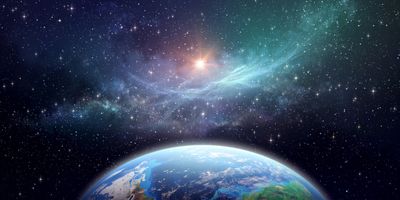
7. Cosmic Microwave Background (CMB): Echoes of the Big Bang:
The afterglow of the Big Bang, known as the cosmic microwave background, permeates the universe. This faint radiation is a snapshot of the early universe when it transitioned from a hot, dense state to the cosmic expanse we observe today. Studying the CMB provides valuable insights into the universe’s age, composition, and evolution.
8. The Expanding Universe: Hubble’s Legacy:
Edwin Hubble’s groundbreaking observations in the early 20th century revealed that the universe is expanding. Galaxies are moving away from each other, and the fabric of spacetime itself is stretching. This discovery laid the foundation for the Big Bang theory and fundamentally altered our perception of the cosmos.
9. Multiverse Hypothesis: Beyond Our Cosmic Horizon:
The idea of a multiverse posits the existence of multiple universes, each with its own unique properties. These universes may operate under different physical laws and constants, presenting a vast cosmic landscape beyond the boundaries of our observable universe. While speculative, the concept of a multiverse arises from certain interpretations of quantum physics and cosmological models.
10. The Fate of the Universe: Big Freeze, Big Crunch, or Big Rip:
The destiny of the universe remains an open question in cosmology. Depending on factors such as dark energy and the density of matter, different scenarios emerge. The universe might continue expanding indefinitely, leading to a “Big Freeze” as galaxies drift apart. Alternatively, gravitational forces could reverse the expansion, resulting in a “Big Crunch.” A more exotic possibility involves the relentless influence of dark energy causing a “Big Rip,” tearing the fabric of spacetime itself.
FAQs: Navigating the Cosmos
Q1: How did the universe begin?
A1: The prevailing scientific theory for the origin of the universe is the Big Bang. Approximately 13.8 billion years ago, the universe began as a hot, dense state and has been expanding ever since.
Q2: What is dark matter?
A2: Dark matter is a mysterious, invisible substance that does not emit, absorb, or reflect light. It exerts gravitational influence on galaxies and galaxy clusters, significantly outweighing observable matter.
Q3: Are there other habitable planets in the universe?
A3: The discovery of thousands of exoplanets has fueled the search for habitable worlds. While some exoplanets are located in their star’s habitable zone, the conditions for life as we know it remain uncertain.
Q4: Can anything escape
a black hole?
A4: Once an object crosses the event horizon of a black hole, it is considered trapped; nothing, not even light, can escape. The boundary defining this point of no return is known as the event horizon.
Q5: What is the cosmic microwave background (CMB)?
A5: The cosmic microwave background is faint radiation permeating the universe, providing a snapshot of the early universe’s conditions. It serves as crucial evidence supporting the Big Bang theory.
Q6: How do we observe distant galaxies?
A6: Observing distant galaxies involves powerful telescopes that capture electromagnetic radiation, including visible light, radio waves, and X-rays. Advancements in technology, such as the Hubble Space Telescope, have revolutionized our ability to study galaxies far beyond our cosmic neighborhood.
Q7: What is the significance of Edwin Hubble’s discoveries?
A7: Edwin Hubble’s observations demonstrated that galaxies are moving away from each other, revealing the expansion of the universe. This foundational discovery led to the formulation of the Big Bang theory and reshaped our understanding of cosmology.
Q8: What is the multiverse hypothesis?
A8: The multiverse hypothesis proposes the existence of multiple universes, each with its own distinct properties. This speculative idea arises from certain interpretations of quantum mechanics and cosmological models, suggesting a vast cosmic landscape beyond our observable universe.
Q9: How will the universe end?
A9: The fate of the universe remains uncertain and depends on factors such as dark energy and the density of matter. Possible scenarios include the “Big Freeze,” “Big Crunch,” or the more exotic “Big Rip,” each with distinct outcomes for the future of the cosmos.
Q10: Can we ever explore beyond our observable universe?
A10: Currently, the vastness of the universe beyond our observable horizon is beyond our reach due to the limitations imposed by the speed of light and the age of the cosmos. As technology advances, future generations may develop new methods for exploring more distant realms.
Exploring the Cosmic Tapestry:
In our quest to understand the universe, humanity stands at the threshold of a cosmic frontier. The mysteries of dark matter, the profound influence of black holes, and the tantalizing possibility of habitable worlds beyond our solar system continue to captivate the imagination of scientists and stargazers alike. As we navigate the celestial expanse, armed with powerful telescopes, cutting-edge technologies, and insatiable curiosity, the universe reveals its secrets, inviting us to unravel the cosmic tapestry and explore the wonders that lie beyond the boundaries of our cosmic horizon.


