







Machine Learning: 1 Unraveling the Tapestry of Intelligent Algorithms
Machine Learning (ML), a subset of artificial intelligence, has emerged as a transformative force, enabling computers to learn and make decisions from data. This dynamic field has revolutionized industries, from healthcare and finance to education and beyond. In this comprehensive exploration, we will unravel the intricacies of machine learning, from its foundational principles and key algorithms to real-world applications and ethical considerations.
Understanding Machine Learning:
1. Defining Machine Learning:
Machine Learning is a branch of artificial intelligence that empowers computers to learn patterns and make decisions without being explicitly programmed. It involves the development of algorithms that enable machines to improve their performance over time based on experience.
2. Three Types of Machine Learning:
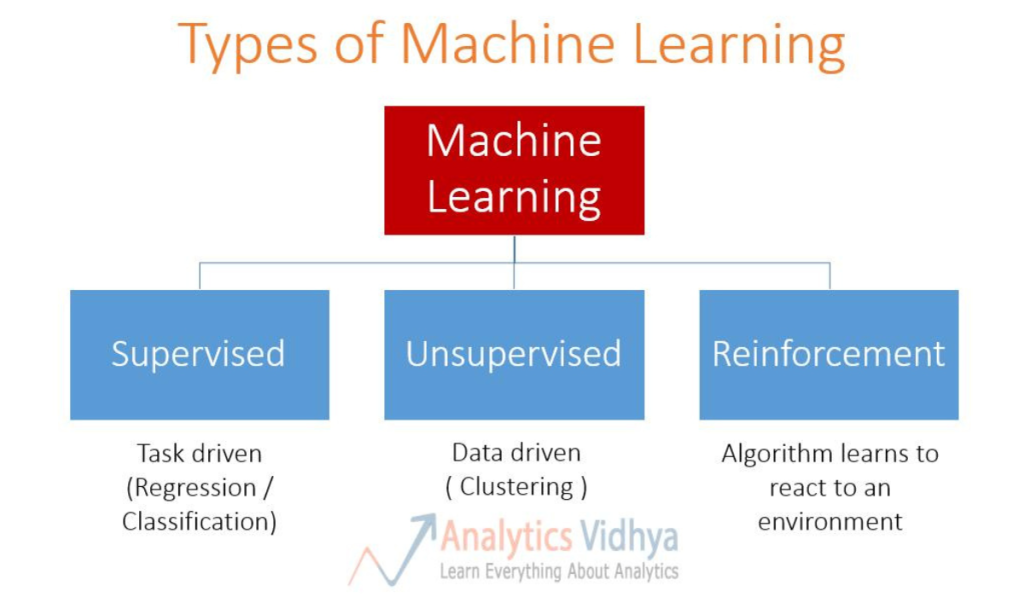
Machine Learning is broadly categorized into three types:
Supervised Learning:
In supervised learning, the algorithm is trained on a labeled dataset, where the input data is paired with corresponding output labels. The model learns to map inputs to outputs, making predictions on new, unseen data.
Unsupervised Learning:
Unsupervised learning involves training algorithms on unlabeled data, allowing the model to discover patterns and relationships within the data without predefined output labels. Clustering and dimensionality reduction are common unsupervised learning tasks.
Reinforcement Learning:
Reinforcement learning operates on the principle of an agent learning through interaction with an environment. The agent receives feedback in the form of rewards or penalties based on its actions, guiding it toward optimal decision-making.
Historical Evolution of Machine Learning:

3. Early Foundations:
The roots of machine learning trace back to the mid-20th century, with pioneers laying the groundwork for computational models capable of learning from data.
4. Arthur Samuel and the Game of Checkers:
In 1959, Arthur Samuel, a computer scientist, developed a program that learned to play checkers through self-play. This marked a seminal moment in machine learning, showcasing the potential of computers to improve performance through experience.
Key Figures:
- Arthur Samuel: Coined the term “machine learning” and made significant contributions to its early development.
5. The Rise of Neural Networks:
Neural networks, inspired by the human brain’s architecture, gained prominence in the 1980s. Despite initial challenges, neural networks became a foundational element of modern machine learning.
6. The Era of Big Data:
Advancements in data collection, storage, and processing capabilities in the late 20th century paved the way for the current era of machine learning. The availability of vast datasets became instrumental in training complex models.
7. Deep Learning Resurgence:
In the 21st century, the resurgence of interest in deep learning, a subfield of machine learning, led to breakthroughs in image recognition, natural language processing, and other complex tasks.
Milestones:
- ImageNet Competition: The success of deep learning models in the ImageNet Large Scale Visual Recognition Challenge marked a turning point in computer vision.
Key Concepts in Machine Learning:
8. Feature Engineering:
Feature engineering involves selecting, transforming, and optimizing input variables (features) to enhance a machine learning model’s performance. It plays a crucial role in determining the model’s ability to extract meaningful patterns from data.
Importance:
- Optimizing Inputs: Well-engineered features contribute to a model’s ability to learn relevant patterns and make accurate predictions.
9. Ensemble Learning:
Ensemble learning combines multiple models to improve overall performance. Techniques like bagging (Bootstrap Aggregating) and boosting enhance model robustness and generalization.
Popular Algorithms:
- Random Forest: An ensemble of decision trees, each trained on a subset of data, collectively contributes to more accurate predictions.
10. Overfitting and Underfitting:
Overfitting occurs when a model learns the training data too well, capturing noise and producing poor generalization on new data. Underfitting, on the other hand, is when a model is too simple to capture the underlying patterns.
Balancing Act:
- Regularization Techniques: Balancing overfitting and underfitting involves using regularization techniques like L1 and L2 regularization.
Machine Learning in Practice:
11. Natural Language Processing (NLP):
NLP enables machines to understand, interpret, and generate human language. Applications range from chatbots and language translation to sentiment analysis and text summarization.
Transformative Applications:
- Chatbots: AI-powered chatbots use NLP to engage in natural language conversations, assisting users in various tasks.
12. Computer Vision:
Computer vision empowers machines to interpret and make decisions based on visual data. It is integral to facial recognition, object detection, and autonomous vehicles.
Real-world Impact:
- Medical Imaging: Computer vision aids in the analysis of medical images, contributing to diagnostic accuracy in fields like radiology.
13. Recommender Systems:
Recommender systems leverage machine learning to analyze user preferences and make personalized recommendations. These systems are prevalent in online platforms, such as streaming services and e-commerce.
Algorithm Types:
- Collaborative Filtering: Recommender systems often use collaborative filtering algorithms to recommend items based on user behavior and preferences.
Ethical Considerations in Machine Learning:
14. Bias and Fairness:
Machine learning models can perpetuate biases present in training data, leading to unfair outcomes. Addressing bias and ensuring fairness in algorithms is a critical ethical consideration.
Mitigation Strategies:
- Diverse Training Data: Ensuring diverse and representative datasets help mitigate bias in machine learning models.
15. Transparency and Explainability:
The opacity of certain machine learning models raises concerns about accountability and transparency. Efforts toward developing explainable AI aim to demystify complex models.
Ethical Guidelines:
- Ethical AI Frameworks: Organizations and researchers are developing ethical guidelines for the responsible development and deployment of machine learning models.
FAQs: Navigating Machine Learning
Q1: What is the difference between machine learning and artificial intelligence?
A1: Artificial intelligence (AI) is a broader concept encompassing machines’ ability to perform tasks that typically require human intelligence. Machine learning is a subset of AI, focusing specifically on enabling machines to learn from data and improve performance over time.
Q2: How does unsupervised learning differ from supervised learning?
A2: In supervised learning, the algorithm is trained on labeled data with known output labels. Unsupervised learning, in contrast, involves training on unlabeled data, and the model learns patterns and relationships without predefined output labels.
Q3: What role does reinforcement learning play in machine learning?
A3: Reinforcement learning involves training an agent to make decisions by interacting with an environment. The agent receives feedback in the form of rewards or penalties, guiding it toward optimal decision-making.
Q4: How can bias in machine learning be addressed?
A4: Addressing bias in machine learning involves careful curation of diverse and representative datasets, continuous monitoring for bias, and the development of algorithms that prioritize fairness and equity.
Q5: What are some challenges in implementing machine learning in real-world applications?
A5: Challenges in implementing machine learning include data privacy concerns, the need for large and high-quality datasets, interpretability of complex
models, and ethical considerations regarding bias and fairness.
Q6: Can machine learning models be adapted for different industries?
A6: Yes, machine learning models can be adapted for various industries, including healthcare, finance, education, and more. Customization involves tailoring algorithms to specific use cases and optimizing for industry-specific challenges.
Q7: How do machine learning models learn from data?
A7: Machine learning models learn from data through a process of training. During training, the model is exposed to input data with corresponding output labels, adjusting its parameters to minimize the difference between predicted and actual outputs.
Q8: What are the limitations of machine learning models?
A8: Limitations of machine learning models include the potential for bias, susceptibility to adversarial attacks, and challenges in generalizing to unseen data. Achieving robustness and interpretability remains an ongoing area of research.
Q9: How is machine learning applied in healthcare?
A9: In healthcare, machine learning is applied to tasks such as medical image analysis, disease prediction, drug discovery, and personalized treatment plans. These applications enhance diagnostic accuracy and treatment efficacy.
Q10: What are some emerging trends in machine learning?
A10: Emerging trends in machine learning include the advancement of deep learning techniques, the integration of machine learning with other technologies like edge computing and the Internet of Things (IoT), and increased emphasis on ethical AI practices.
Conclusion:
Machine Learning, with its diverse algorithms and applications, stands as a pillar of modern technological innovation. From its early foundations to the current era of deep learning, this field continues to evolve, pushing the boundaries of what machines can learn and accomplish. As machine learning finds its way into various industries, responsible development, ethical considerations, and ongoing research are essential to ensure that these intelligent algorithms contribute positively to society. Navigating the realm of machine learning requires a deep understanding of its principles, applications, and the ethical considerations that guide its responsible use in shaping our technological landscape.


