







Microscope as a Gateway to Hidden Worlds 2024
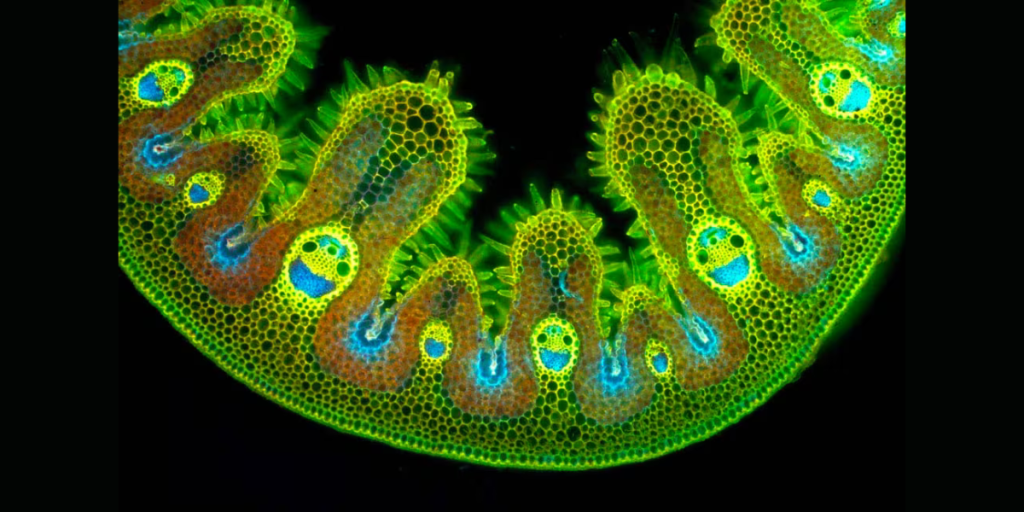
The microscope, a powerful tool of scientific discovery, serves as a portal to the intricate and often unseen realms of nature. From the smallest organisms to the tiniest structures, microscopes unveil the beauty and complexity that exist beyond the naked eye’s perception. In this comprehensive exploration, we delve into the various types of microscopes, their applications in studying nature, and the transformative impact they have had on our understanding of the natural world.
The Evolution of Microscope:
1. Early Microscopes:
- In the 17th century, pioneers like Antonie van Leeuwenhoek crafted simple microscopes, opening windows into the microscopic world.
- Leeuwenhoek observed bacteria, protists, and sperm cells, laying the foundation for microbiology.
2. Compound Microscopes:
- Developed in the 19th century, compound microscopes utilize multiple lenses for higher magnification.
- Enabled scientists to study cells, tissues, and smaller biological structures.
3. Electron Microscopes:
- Introduced in the 20th century, electron microscopes use electron beams for unprecedented resolution.
- Transmission electron microscopes (TEM) and scanning electron microscopes (SEM) reveal ultrafine details.
Types of Microscopes and Their Applications in Nature:
4. Light Microscopes:
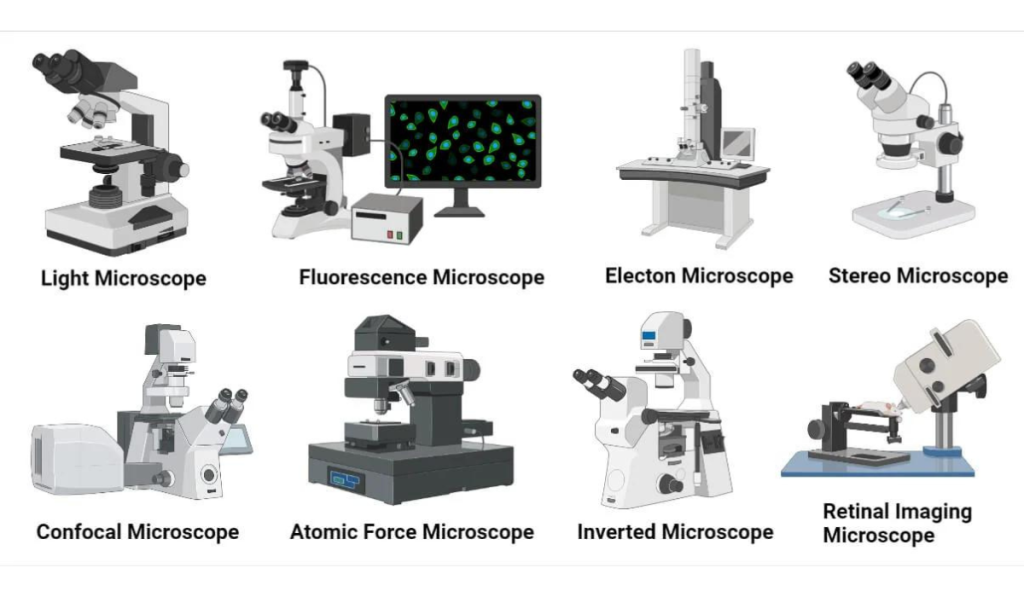
- Brightfield Microscopes: Illuminate specimens against a bright background, suitable for transparent samples like cells.
- Phase-Contrast Microscopes: Enhance contrast in transparent specimens without staining.
- Fluorescence Microscopes: Illuminate specimens with fluorescent dyes, revealing specific structures or molecules.
5. Confocal Microscopes:
- Utilize laser beams to create 3D images of fluorescently labeled specimens.
- Ideal for studying cellular structures with precision.
6. Electron Microscopes:
- Transmission Electron Microscopes (TEM): Transmit electrons through thin sections, offering detailed internal views of cells and tissues.
- Scanning Electron Microscopes (SEM): Scan surfaces with electron beams, producing high-resolution 3D images of specimens.
7. Atomic Force Microscopes (AFM):
- Probe surfaces with a sharp tip, providing nanoscale resolution.
- Useful for studying biological molecules and materials at the atomic level.
8. Inverted Microscopes:
- Suitable for observing cells and tissues cultured in flasks or dishes.
- Commonly used in cell biology and tissue culture applications.
Applications in Nature:

9. Microscopic Life in Water:
- Microscopes unveil a diverse array of microscopic life in water, from algae and protozoa to tiny aquatic invertebrates.
10. Botanical Exploration:
- Studying plant cells, tissues, and structures aids in understanding plant development and physiology.
- Pollen grains, stomata, and plant pathogens reveal intricate details.
11. Microbes and Microbial Ecology:
- Microscopes play a crucial role in microbiology, allowing the study of bacteria, archaea, fungi, and viruses.
- Microbial ecology explores the roles of microorganisms in various ecosystems.
12. Entomology and Insect Anatomy:
- Insect structures, such as wings, antennae, and mouthparts, are examined using microscopes.
- Microscopy aids in taxonomy, insect physiology, and understanding ecological interactions.
13. Cell Biology:
- Microscopes are fundamental in cell biology, elucidating cellular structures, organelles, and cellular processes.
- Techniques like immunofluorescence reveal the localization of specific proteins within cells.
14. Aquatic Microorganisms:
- Microscopes uncover the diversity of microorganisms in aquatic environments, contributing to the study of ecosystems and water quality.
15. Soil Microbiology:
- Microscopy is essential for studying soil microorganisms, including bacteria, fungi, and protozoa.
- Understanding soil microbiology is crucial for agriculture and environmental science.
The Impact of Microscopy on Scientific Discoveries:
16. Cell Theory:
- Microscopes played a pivotal role in the development of cell theory, stating that all living organisms are composed of cells, and cells are the basic units of life.
17. Germ Theory of Disease:
- Microscopic observations by scientists like Louis Pasteur and Robert Koch led to the formulation of the germ theory, attributing diseases to microorganisms.
18. DNA Structure:
- The discovery of the double helix structure of DNA by James Watson and Francis Crick was facilitated by X-ray crystallography, a technique related to microscopy.
19. Nobel Prize-Winning Discoveries:
- Numerous Nobel Prize-winning discoveries in physiology or medicine relied on the use of microscopes, underscoring their significance in scientific breakthroughs.
Frequently Asked Questions (FAQs):
Q1: What is the difference between a light microscope and an electron microscope?
A1: Light microscopes use visible light to illuminate specimens and are suitable for studying transparent or stained samples. Electron microscopes, on the other hand, use electron beams for higher resolution and can visualize much smaller structures.
Q2: How does a confocal microscope work?
A2: Confocal microscopes use laser beams to scan specimens point by point. This eliminates out-of-focus light, enabling the creation of detailed 3D images. They are commonly used in fluorescence microscopy.
Q3: What is the resolution of an atomic force microscope?
A3: Atomic force microscopes (AFM) can achieve nanoscale resolution, allowing researchers to study surfaces at the atomic and molecular levels.
Q4: How are microscopes used in environmental science?
A4: Microscopes are employed in environmental science to study microorganisms in water, soil, and air. This includes assessing microbial diversity, understanding ecological interactions, and monitoring environmental health.
Q5: Can microscopes be used for non-biological samples?
A5: Yes, microscopes have applications beyond biology. Geologists use microscopes to study minerals, materials scientists examine nanomaterials, and physicists utilize them for various applications.
Q6: How does electron microscopy contribute to nanotechnology?
A6: Electron microscopes are instrumental in nanotechnology by allowing researchers to visualize and manipulate materials at the nanoscale. This contributes to the development of nanomaterials and nanodevices.
Q7: What is the importance of studying microscopic life in water?
A7: Studying microscopic life in water provides insights into aquatic ecosystems, biodiversity, and water quality. It helps researchers understand the roles of microorganisms in nutrient cycling and ecosystem dynamics.
Q8: How has microscopy contributed to medical diagnostics?
A8: Microscopy is essential in medical diagnostics for examining blood cells, tissues, and pathogens. It aids in diagnosing diseases, identifying infections, and understanding cellular abnormalities.
Q9: Can microscopes be used in educational settings?
A9: Yes, microscopes are valuable educational tools. They allow students to explore the microscopic world, understand biological concepts, and engage in hands-on scientific inquiry
.
Q10: Are there portable microscopes for outdoor use?
A10: Yes, there are portable microscopes designed for outdoor use. These compact and lightweight microscopes are suitable for fieldwork, allowing researchers and enthusiasts to explore nature on the go.
Conclusion:
Microscopes, in their various forms, have revolutionized our understanding of nature’s intricacies. From the minute structures within a cell to the diverse microorganisms populating water droplets, microscopes serve as indispensable tools in scientific exploration. As technology advances, so too does our ability to unravel the mysteries of the microscopic world. Whether used in the pursuit of groundbreaking scientific discoveries or as educational instruments in classrooms, microscopes continue to be the key to unlocking the hidden wonders that surround us. As we peer through the lenses of these remarkable devices, we gain not only a glimpse into the microscopic realms but also a deeper appreciation for the awe-inspiring complexity of the natural world.
Related links: Telescopes


