







Deforestation: Unraveling the Causes, Consequences, and Conservation Strategies 2024

Introduction:
Deforestation, the widespread clearing of forests for various purposes, has emerged as one of the most pressing environmental issues of our time. This comprehensive exploration delves into the causes and drivers behind deforestation, the far-reaching consequences for ecosystems and human societies, and the urgent need for conservation strategies to mitigate its impacts and promote sustainable land use.
I. Understanding Deforestation:
1. Definition:
Deforestation refers to the large-scale removal or clearing of forests, transforming these areas into non-forest land. This process involves the complete or partial removal of trees, often for agricultural, logging, or urban development purposes.
2. Causes of Deforestation:
- Agriculture: The expansion of agricultural activities, including cattle ranching and large-scale crop cultivation, is a primary driver of deforestation. Farmers clear land to make way for fields and pastures.
- Logging: The demand for timber, paper, and wood products drives logging activities, leading to extensive tree removal. Unsustainable logging practices contribute to deforestation and habitat degradation.
- Infrastructure Development: The construction of roads, highways, and urban areas necessitates the clearing of large areas of forest. Infrastructure projects can fragment ecosystems and accelerate deforestation.
- Mining: Extractive industries, such as mining and oil extraction, often require clearing large tracts of land. This contributes to habitat destruction and the loss of biodiversity.
II. Consequences of Deforestation:
1. Loss of Biodiversity:
Deforestation is a major threat to global biodiversity. Forests are home to a vast array of plant and animal species, and their destruction leads to habitat loss, fragmentation, and the decline or extinction of numerous species.
2. Climate Change:
Forests play a crucial role in mitigating climate change by absorbing carbon dioxide during photosynthesis. The removal of trees releases stored carbon back into the atmosphere, contributing to the greenhouse effect and global warming.
3. Disruption of Ecosystem Services:
Forests provide essential ecosystem services, including oxygen production, water regulation, and soil fertility. Deforestation disrupts these services, impacting local and global ecosystems and compromising the well-being of human communities.
4. Soil Erosion and Degradation:
The removal of trees and vegetation exposes the soil to erosion by wind and water. Deforested areas are vulnerable to soil degradation, loss of fertility, and increased risks of landslides and floods.
5. Impact on Indigenous Communities:
Indigenous communities often depend on forests for their livelihoods and cultural practices. Deforestation not only threatens their traditional ways of life but can also lead to social and economic challenges.
III. Global Deforestation Trends:
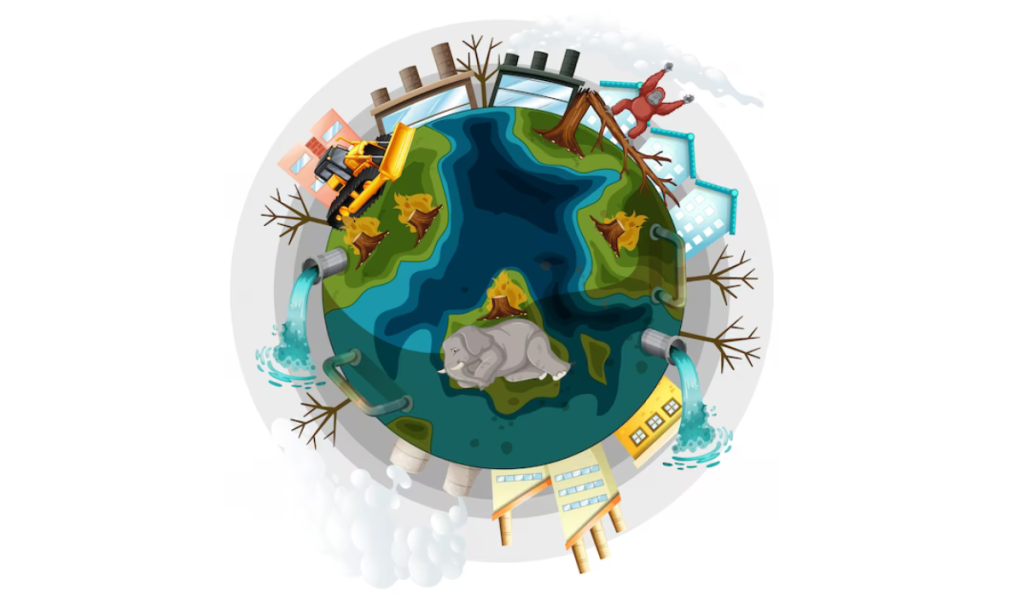
1. Regional Hotspots:
Certain regions are particularly affected by deforestation. The Amazon rainforest, the Congo Basin, Southeast Asia, and parts of Central America are recognized as global deforestation hotspots.
2. Forest Degradation:
In addition to outright deforestation, many forests experience degradation, characterized by the loss of their ecological integrity. This includes selective logging, fragmentation, and other activities that compromise the health and resilience of ecosystems.
3. Expansion of Agricultural Frontiers:
The conversion of forests into agricultural land, especially for soy, palm oil, and cattle production, is a significant driver of deforestation. The expansion of agricultural frontiers contributes to the loss of diverse and complex ecosystems.
4. Illegal Logging:
Illegal logging, often driven by demand for valuable timber, poses a substantial threat to forests. It undermines conservation efforts, contributes to deforestation, and deprives local communities of resources.
IV. Conservation and Mitigation Strategies:
1. Sustainable Logging Practices:
Implementing sustainable logging practices, such as selective logging and reduced-impact logging, helps minimize the ecological impact of timber extraction. Certification programs like the Forest Stewardship Council (FSC) promote responsible forestry.
2. Reforestation and Afforestation:
Efforts to restore deforested or degraded areas involve planting native trees (reforestation) or establishing forests in areas where they did not exist before (afforestation). These initiatives help sequester carbon, restore biodiversity, and protect watersheds.
3. Protected Areas and Conservation Reserves:
Establishing protected areas and conservation reserves helps safeguard critical ecosystems from further deforestation. National parks, wildlife sanctuaries, and marine reserves contribute to biodiversity conservation and habitat protection.
4. Agroforestry:
Agroforestry integrates trees and shrubs into agricultural landscapes, providing multiple benefits. It enhances soil fertility, promotes biodiversity, and offers sustainable land-use alternatives, reducing the pressure on natural forests.
5. Indigenous and Community-based Conservation:
Involving indigenous communities and local stakeholders in conservation efforts is crucial. Supporting community-led initiatives empowers local populations to manage and protect their forests sustainably.
V. Deforestation and Climate Change:
1. Carbon Sequestration:
Forests act as carbon sinks, absorbing and storing carbon dioxide from the atmosphere. Deforestation releases stored carbon back into the air, contributing to increased greenhouse gas concentrations.
2. Feedback Loops:
Deforestation can create feedback loops that exacerbate climate change. For example, as forests disappear, the Earth’s surface becomes less reflective (lower albedo), leading to increased absorption of solar radiation and higher temperatures.
3. Altered Weather Patterns:
Deforestation can influence local and regional weather patterns, leading to changes in precipitation, temperature, and atmospheric circulation. This can have cascading effects on ecosystems and agriculture.
VI
. Deforestation FAQs:
Q1: Why is deforestation a global concern?
A1: Deforestation is a global concern due to its far-reaching impacts on biodiversity, climate, and ecosystem services. It contributes to the loss of vital habitats, disrupts global weather patterns, and accelerates climate change.
Q2: How can individuals contribute to preventing deforestation?
A2: Individuals can contribute to preventing deforestation by supporting sustainable and certified wood products, reducing meat consumption (as livestock farming is a major driver of deforestation), and advocating for policies that promote responsible forestry.
Q3: Can deforested areas be restored?
A3: Yes, deforested areas can be restored through reforestation and afforestation efforts. Planting native trees and implementing sustainable land-use practices help rehabilitate degraded ecosystems and promote biodiversity.
Q4: What is the role of indigenous communities in forest conservation?
A4: Indigenous communities often have deep connections to their local environments and possess traditional knowledge about sustainable resource management. Involving indigenous communities in conservation efforts enhances the effectiveness and cultural relevance of initiatives.
Q5: How does deforestation affect water resources?
A5: Deforestation can lead to changes in water availability and quality. Trees play a crucial role in regulating water flow, preventing soil erosion, and maintaining the health of watersheds. Deforestation can result in increased runoff, soil erosion, and altered water cycles.
Q6: Are there economic alternatives to deforestation?
A6: Yes, there are economic alternatives to deforestation, such as sustainable forestry, agroforestry, and ecotourism. These practices provide livelihoods while promoting the conservation of forests and biodiversity.
Q7: What role do international agreements play in addressing deforestation?
A7: International agreements, such as the Paris Agreement and the United Nations Framework Convention on Climate Change (UNFCCC), emphasize the importance of addressing deforestation to combat climate change. Global cooperation is crucial for coordinating efforts and implementing effective conservation strategies.
Q8: How does deforestation impact indigenous cultures?
A8: Deforestation can have profound impacts on indigenous cultures by disrupting traditional livelihoods, threatening sacred sites, and eroding cultural practices closely tied to the forest. It is essential to respect and protect the rights of indigenous communities in conservation efforts.
Conclusion:
Deforestation stands as a critical challenge that demands urgent and concerted action. The loss of forests not only jeopardizes biodiversity and ecosystem services but also exacerbates climate change, with global implications. Conservation strategies, sustainable land-use practices, and international cooperation are essential elements in addressing deforestation and fostering a harmonious relationship between humanity and the world’s forests. Through a collective commitment to responsible forestry and conservation efforts, we can strive to preserve the invaluable treasures of our planet’s diverse ecosystems for present and future generations.
Related link: Science of the Total Environment


