







Chromatography Techniques: Unraveling the Spectrum of Separation 2024

Chromatography, a powerful analytical technique, stands at the forefront of modern science, enabling the separation and analysis of complex mixtures with unparalleled precision. In this comprehensive article, we delve into the diverse realm of chromatography techniques, exploring their principles, applications, and the intricate stories they reveal within chemical substances. Additionally, we address frequently asked questions (FAQs) to provide clarity on common queries surrounding chromatography techniques.
I. Introduction to Chromatography
1. Defining Chromatography:
- Separation Science: Chromatography is a separation technique that exploits differences in the distribution of components between two phases – a stationary phase and a mobile phase.
- Analytical and Preparative Applications: Widely used in both analytical and preparative contexts, chromatography plays a pivotal role in diverse scientific disciplines.
2. Core Principles:
- Adsorption vs. Partition Chromatography: Chromatography can be categorized into adsorption and partition techniques, each based on distinct principles of interaction between molecules and the stationary phase.
II. Types of Chromatography Techniques
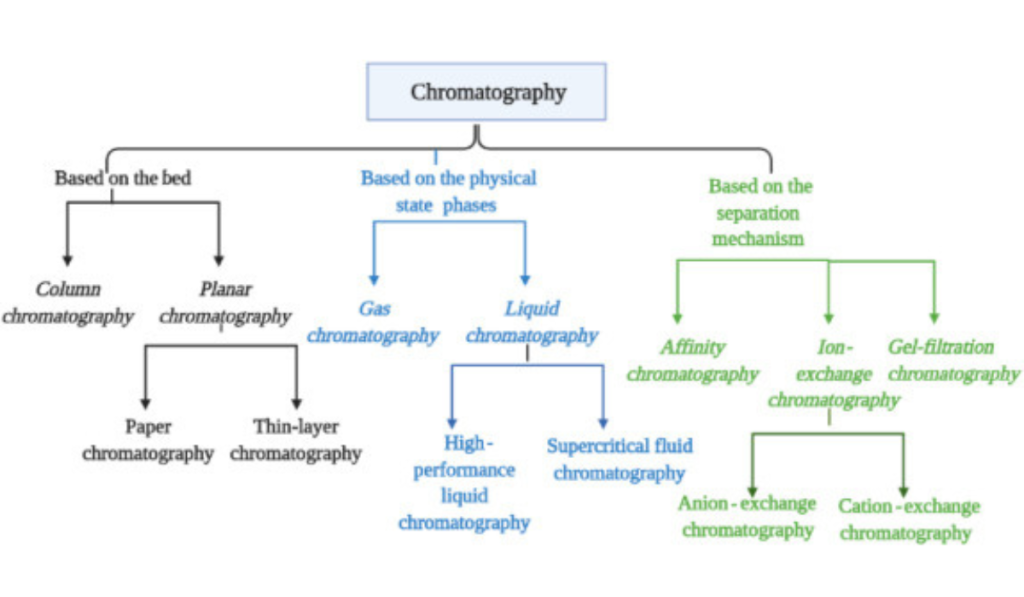
1. Gas Chromatography (GC):
- Volatile Compounds: Ideal for volatile compounds, GC separates components based on their vaporization and partition between a mobile gas phase and a stationary liquid phase.
- Applications in Analytical Chemistry: Widely used in analytical chemistry for the analysis of complex mixtures, including environmental samples and pharmaceuticals.
2. Liquid Chromatography (LC):
- Diverse Modes: LC encompasses various modes such as normal phase, reverse phase, and ion exchange, offering flexibility in separating compounds based on different physicochemical properties.
- Biochemical Applications: Applied extensively in biochemical and pharmaceutical research for the separation and analysis of biomolecules.
3. High-Performance Liquid Chromatography (HPLC):
- Enhanced Resolution: HPLC, an advanced form of liquid chromatography, offers higher resolution and faster analysis through the use of a highly pressurized liquid mobile phase.
- Pharmaceutical Quality Control: Widely employed in pharmaceutical quality control for ensuring the purity of drug compounds.
4. Thin-Layer Chromatography (TLC):
- Simple and Rapid: TLC is a simple and rapid chromatographic technique where the stationary phase is a thin layer of an adsorbent on a flat surface.
- Educational and Qualitative Analysis: Commonly used for educational purposes and qualitative analysis due to its simplicity and visual appeal.
5. Affinity Chromatography:
- Selective Binding: Affinity chromatography relies on specific interactions between a target molecule and a ligand immobilized on the stationary phase.
- Protein Purification: Widely used in biochemistry for the purification of proteins based on their specific binding affinities.
III. Applications Across Industries

1. Pharmaceuticals:
- Drug Development: Chromatography is integral to drug development, ensuring the purity and quality of pharmaceutical compounds through rigorous analysis.
- Pharmacokinetics: Used in pharmacokinetic studies to understand the absorption, distribution, metabolism, and excretion of drugs.
2. Environmental Analysis:
- Pollutant Detection: Chromatography aids in the detection and quantification of environmental pollutants, contributing to environmental monitoring and regulatory compliance.
- Water and Air Quality: Applied to assess the quality of water and air by analyzing contaminants and pollutants.
3. Food and Beverage Industry:
- Quality Control: Chromatography techniques play a vital role in quality control within the food and beverage industry, ensuring compliance with safety and regulatory standards.
- Flavor and Fragrance Analysis: Used to analyze flavor compounds in foods and fragrances in perfumes.
IV. FAQs: Navigating Common Questions
Q1: How does chromatography work at the molecular level?
A1: Chromatography exploits the different affinities of molecules for the stationary and mobile phases. Components with higher affinity for the stationary phase take longer to elute, leading to separation based on their properties.
Q2: What is the role of the mobile phase in chromatography?
A2: The mobile phase carries the sample through the stationary phase, facilitating the separation of components. It can be a gas (in gas chromatography) or a liquid (in liquid chromatography), and its composition influences separation.
Q3: Can chromatography be used for quantitative analysis?
A3: Yes, chromatography is widely used for quantitative analysis. The area under the peaks in the chromatogram corresponds to the quantity of the separated components, allowing for precise quantification.
Q4: How does HPLC differ from traditional liquid chromatography?
A4: HPLC employs a highly pressurized liquid mobile phase, allowing for faster and more efficient separations compared to traditional liquid chromatography. The increased pressure improves resolution and speed.
Q5: What are the advantages of affinity chromatography in protein purification?
A5: Affinity chromatography offers high specificity, allowing the isolation of a target protein based on its unique binding interactions with the immobilized ligand. This results in highly purified proteins.
Q6: Is TLC suitable for quantitative analysis?
A6: While TLC is primarily used for qualitative analysis, it can be adapted for quantitative purposes by comparing the intensity of spots or by using densitometry to measure spot size.
Conclusion:
Chromatography techniques, with their diverse array of
methods and applications, have revolutionized the field of analytical chemistry. From unraveling the composition of complex mixtures to ensuring the purity of pharmaceutical compounds, chromatography plays a pivotal role across industries. As technology advances, chromatography continues to evolve, offering scientists new tools to explore the intricate world of chemical separation. Through this exploration, we not only enhance our scientific understanding but also pave the way for innovations that shape the future of analytical sciences. The stories told by chromatography techniques are not only tales of separation but narratives that drive progress and discovery in the realm of science.
Related link: Spectrophotometer


