







Astronomy: Unveiling the Wonders of the Cosmos 2024
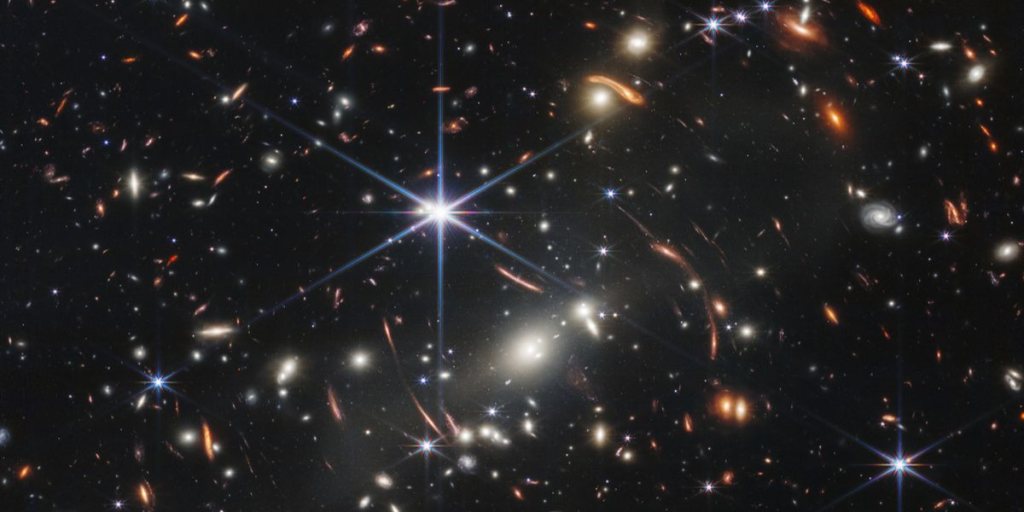
Astronomy, the ancient science of studying celestial bodies and the vast expanse of the universe, has captivated human curiosity for millennia. From the early observations of the night sky by ancient civilizations to the cutting-edge technologies of modern space exploration, astronomy continues to unravel the mysteries of the cosmos. In this comprehensive exploration, we will journey through the foundations of astronomy, its historical evolution, key concepts, technological advancements, and the profound impact it has on our understanding of the universe.
Understanding Astronomy:
1. Defining Astronomy:
Astronomy is the scientific study of celestial objects such as stars, planets, galaxies, and cosmic phenomena. It encompasses the observation and analysis of the universe, seeking to understand its origins, evolution, and fundamental laws.
2. Branches of Astronomy:
Astronomy is divided into several branches, including:
Observational Astronomy:
Involves direct observation and data collection from celestial objects.
Theoretical Astronomy:
Focuses on developing models and theories to explain astronomical phenomena.
Astrophysics:
Applies principles of physics to understand the behavior of celestial bodies.
Historical Evolution of Astronomy:
3. Ancient Observations:
Early civilizations, such as the Babylonians, Greeks, and Egyptians, made significant contributions to astronomy. They observed the motion of celestial bodies and developed rudimentary models of the solar system.
4. Ptolemaic and Copernican Models:
The Ptolemaic model, placing Earth at the center of the universe, was later replaced by the Copernican model, which positioned the Sun at the center, marking a paradigm shift in astronomical understanding.
Key Figures:
- Claudius Ptolemy: Proposed the geocentric model.
- Nicolaus Copernicus: Proposed the heliocentric model.
5. Galileo’s Observations:
Galileo Galilei’s use of the telescope in the 17th century revolutionized astronomy. He made groundbreaking observations, including the phases of Venus and the moons of Jupiter.
6. Newtonian Gravity:
Sir Isaac Newton’s laws of motion and law of universal gravitation provided a comprehensive framework for understanding celestial motion and laid the foundation for classical mechanics.
7. Herschel’s Deep-Sky Observations:
William Herschel’s cataloging of deep-sky objects, including galaxies, expanded our understanding of the universe’s vastness.
8. Hubble’s Discoveries:
Edwin Hubble’s observations in the 20th century revealed the expansion of the universe and led to the formulation of Hubble’s Law.
Milestones:
- Hubble Space Telescope: Launched in 1990, providing unprecedented views of distant galaxies.
Key Concepts in Astronomy:
9. Light and Spectroscopy:
The study of light emitted or absorbed by celestial objects provides crucial information about their composition, temperature, and motion. Spectroscopy enables astronomers to analyze the spectral lines of light.
Innovations:
- Spectrographs: Instruments that disperse light into its components for detailed analysis.
10. Stellar Classification:
Stars are classified based on their spectral characteristics, luminosity, and temperature. The Hertzsprung-Russell diagram illustrates the relationship between these stellar properties.
Stellar Evolution:
- Nebula to Supernova: Stars undergo various stages, from nebulae formation to supernova explosions.
11. Exoplanets and Planetary Systems:
The discovery of exoplanets beyond our solar system has opened new frontiers in understanding planetary systems. Techniques like transit and radial velocity are used for exoplanet detection.
Technological Advances:
- Kepler Space Telescope: Dedicated to exoplanet discovery through the transit method.
12. Black Holes and Dark Matter:
Black holes, formed from collapsed massive stars, exert gravitational forces so strong that nothing, not even light, can escape. Dark matter, though invisible, is inferred to exist based on its gravitational effects.
Observational Challenges:
- Event Horizon Telescope: Captured the first image of a black hole’s shadow in 2019.
Technological Advancements:
13. Space Telescopes:
Orbiting telescopes, such as the Hubble Space Telescope and the James Webb Space Telescope (JWST), provide clear views of the universe unhampered by Earth’s atmosphere.
JWST Anticipation:
- James Webb Space Telescope: The successor to Hubble, designed for infrared observations, set to launch.
14. Radio and Space-Based Observatories:
Radio telescopes and space-based observatories, like the Chandra X-ray Observatory and the Fermi Gamma-ray Space Telescope, reveal different aspects of the electromagnetic spectrum.
Innovations:
- Square Kilometre Array (SKA): An upcoming radio telescope project with unprecedented sensitivity.
15. Robotic and Interplanetary Exploration:
Robotic spacecraft, including rovers like Curiosity on Mars and probes like Voyager and New Horizons, explore and gather data from distant celestial bodies.
Future Exploration:
- Mars Sample Return Mission: A planned mission to return samples from the Martian surface for analysis.
Ethical Considerations in Astronomy:
16. Space Debris and Satellite Congestion:
The increasing amount of space debris poses risks to operational satellites and future space missions. Ethical considerations include responsible satellite deployment and debris mitigation.
Sustainability Measures:
- Guidelines and Regulations: International agreements and guidelines aim to promote sustainable space practices.
17. Cultural Heritage and Dark Sky Preservation:
Preserving dark skies for astronomical observations is crucial. Ethical considerations involve minimizing light pollution and protecting cultural heritage sites related to astronomy.
Community Engagement:
- Dark Sky Reserves: Designations to protect areas with minimal light pollution.
Astronomy in Practice:
18. Citizen Science and Public Engagement:
Citizen science projects, such as Zooniverse, involve the public in astronomical research. Outreach efforts aim to enhance public understanding and interest in astronomy.
Popular Projects:
- Planet Hunters: Enlists volunteers to analyze data from the Kepler Space Telescope.
19. Astronomical Collaborations:
International collaborations, such as the European Southern Observatory (ESO) and the Square Kilometre Array (SKA) project, foster shared resources and expertise.
Global Observatories:
- Very Large Telescope (VLT): Located in Chile, operated by ESO for optical and infrared observations.
The Future of Astronomy:
20. Gravitational Wave Astronomy:
The detection of gravitational waves by instruments like LIGO and Virgo opens a new era of astronomy, allowing the observation of cosmic events, including mergers of black holes and neutron stars.
Anticipated Discoveries:
- Multi-Messenger Astronomy: Integrating data from multiple sources, including gravitational waves, to study celestial phenomena.
21. Astrobiology and the Search for Extraterrestrial Life:
Exploration of potentially habitable exoplanets and moons fuels the search for extraterrestrial life. Missions to Mars and the icy moons of Jupiter and Saturn hold promise.
**
Missions:**
- Europa Clipper: Planned to explore Jupiter’s moon Europa for signs of life.
FAQs: Navigating Astronomy
Q1: How do astronomers measure the distance to stars and galaxies?
A1: Astronomers use various methods, including parallax for nearby stars, Cepheid variable stars as distance indicators, and redshift for distant galaxies. Triangulation and standard candles are common techniques.
Q2: What is dark matter, and why is it important in astronomy?
A2: Dark matter is a mysterious, invisible substance that does not emit, absorb, or reflect light. Its presence is inferred from gravitational effects on visible matter. Understanding dark matter is crucial for explaining the structure and evolution of the universe.
Q3: How are exoplanets discovered, and what makes them significant?
A3: Exoplanets are discovered through techniques like the transit method and radial velocity. Their significance lies in expanding our understanding of planetary systems, including potentially habitable worlds and the prevalence of diverse planetary environments.
Q4: What is the significance of gravitational waves in astronomy?
A4: Gravitational waves, ripples in spacetime caused by massive celestial events, provide a new way to observe the universe. They offer insights into phenomena like black hole mergers and neutron star collisions, enhancing our understanding of the cosmos.
Q5: How do space telescopes differ from ground-based telescopes?
A5: Space telescopes, like the Hubble Space Telescope, orbit Earth and observe the universe from above the atmosphere, avoiding atmospheric distortions. They provide clearer and more detailed images of celestial objects across various wavelengths.
Q6: Are there ethical considerations in the exploration of celestial bodies for signs of extraterrestrial life?
A6: Yes, ethical considerations in astrobiology involve avoiding contamination of celestial bodies with Earth organisms and respecting potential ecosystems. The planetary protection policies aim to prevent interference with possible extraterrestrial life.
Q7: How can the public engage in astronomy research?
A7: Citizen science projects, astronomy clubs, and public observatories offer opportunities for the public to engage in astronomy. Platforms like Zooniverse allow volunteers to contribute to real research projects.
Q8: What is the significance of preserving dark skies for astronomy?
A8: Preserving dark skies is crucial for astronomical observations as artificial light pollution interferes with celestial visibility. It also has cultural and ecological implications, affecting wildlife and human well-being.
Q9: How do gravitational waves contribute to multi-messenger astronomy?
A9: Gravitational waves, along with electromagnetic waves (such as light), neutrinos, and cosmic rays, contribute to multi-messenger astronomy. Integrating data from multiple sources allows astronomers to study cosmic events comprehensively.
Q10: What role does astrobiology play in the future of astronomy?
A10: Astrobiology, the study of life beyond Earth, is a key aspect of the future of astronomy. Exploring potentially habitable environments and searching for signs of extraterrestrial life are central themes in upcoming missions and research endeavors.
Conclusion:
Astronomy, from its humble beginnings as stargazing by ancient civilizations to the sophisticated observatories and spacecraft of today, remains a testament to humanity’s quest for understanding the cosmos. The journey through the history, concepts, and technological advancements in astronomy reveals a discipline that constantly pushes the boundaries of knowledge. As we gaze at the stars and peer into the depths of space, the mysteries of the universe continue to unfold, and astronomy stands as a beacon of exploration, discovery, and wonder. The future promises even more exciting revelations, with advancements in technology, multi-messenger astronomy, and the ongoing search for extraterrestrial life shaping the next chapters in our cosmic journey.
Related links:https://fullsci.net/astrophysics-unraveling-the-cosmic-tapestry/


