







Astrophysics: Unraveling the Cosmic Tapestry 2024
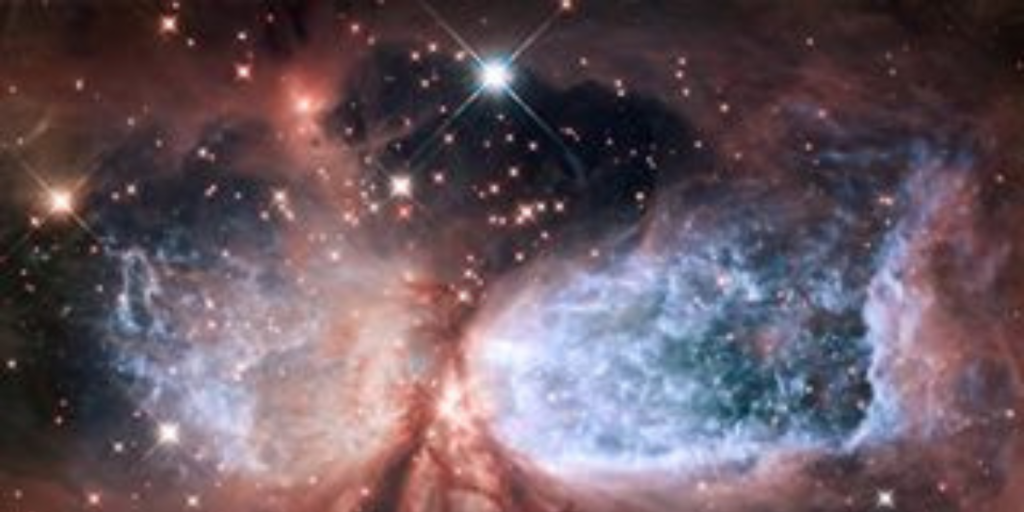
Astrophysics, a captivating branch of astronomy, delves into the physical principles governing the celestial bodies and phenomena that populate our vast universe. It represents the marriage of physics and astronomy, aiming to understand the nature, structure, and behavior of celestial objects through the application of fundamental physical principles. In this comprehensive exploration, we will embark on a journey through the foundations of astrophysics, its historical evolution, key concepts, technological advancements, and the profound impact it has on our understanding of the cosmos.
Understanding Astrophysics:
1. Defining Astrophysics:
Astrophysics is the branch of astronomy that employs the principles of physics and chemistry to understand the nature and behavior of celestial objects. It seeks to unravel the mysteries of the universe by applying the laws of physics to phenomena observed in the cosmos.
2. Intersection of Physics and Astronomy:
While astronomy focuses on the observation and cataloging of celestial objects, astrophysics goes a step further, aiming to explain the underlying physical processes driving the observed phenomena.
Historical Evolution of Astrophysics:
3. Early Observations and Theories:
The roots of astrophysics can be traced back to ancient civilizations that observed the night sky. Early theories, such as the geocentric and heliocentric models, laid the groundwork for understanding celestial motions.
4. Spectroscopy and Stellar Classification:
In the 19th century, the advent of spectroscopy allowed astronomers to analyze the light emitted by stars. This led to the development of stellar classification based on spectral characteristics, a crucial advancement in astrophysics.
Key Figures:
- Joseph Fraunhofer: Discovered absorption lines in the solar spectrum.
- Annie Jump Cannon: Developed the Harvard Classification Scheme for stars.
5. Gravitational Waves and General Relativity:
Albert Einstein’s theory of general relativity, formulated in the early 20th century, provided a new understanding of gravity and predicted the existence of gravitational waves—ripples in spacetime.
Milestones:
- LIGO Detection (2015): The Laser Interferometer Gravitational-Wave Observatory confirmed the existence of gravitational waves.
6. Quantum Mechanics and Cosmology:
The development of quantum mechanics in the early 20th century revolutionized our understanding of fundamental particles and their interactions. Concurrently, advancements in observational astronomy contributed to the emergence of modern cosmology.
Key Concepts:
- Big Bang Theory: Describes the origin and evolution of the universe from a hot, dense state.
Key Concepts in Astrophysics:
7. Stellar Structure and Nucleosynthesis:
Astrophysicists study the internal structure of stars and the processes leading to the synthesis of elements within stars. This includes nuclear fusion reactions that power stars.
Innovations:
- Helioseismology: Studies solar oscillations to probe the internal structure of the Sun.
8. Black Holes and Event Horizons:
Black holes, regions of spacetime with gravitational forces so strong that nothing escapes, are a central focus of astrophysics. The boundary surrounding a black hole is known as the event horizon.
Observational Techniques:
- X-ray Observations: Detecting X-rays emitted by hot matter falling into black holes.
9. High-Energy Astrophysics:
The study of high-energy phenomena, such as supernovae, gamma-ray bursts, and active galactic nuclei, involves understanding extreme conditions and their impact on celestial objects.
Observatories:
- Fermi Gamma-ray Space Telescope: Observes gamma-ray sources in space.
10. Dark Matter and Dark Energy:
Astrophysics grapples with the mysterious components of the universe—dark matter and dark energy. These substances, though invisible, exert significant influences on cosmic structures and expansion.
Detection Efforts:
- Large Hadron Collider (LHC): A particle accelerator exploring properties of dark matter.
Technological Advancements:
11. Space Telescopes and Observatories:
Space-based observatories, such as the Hubble Space Telescope and the Chandra X-ray Observatory, provide clear views of celestial objects by avoiding atmospheric interference.
Hubble’s Contributions:
- Deep Field Observations: Peered into the distant universe, capturing light from galaxies billions of years old.
12. Computational Astrophysics:
Advancements in computing enable complex simulations and numerical models, facilitating the study of astrophysical processes, galaxy formation, and cosmological simulations.
Supercomputing:
- Illustris Simulation: Simulated the evolution of the universe, including the formation of galaxies.
13. Gravitational Wave Detectors:
Instruments like LIGO and Virgo use laser interferometry to detect minuscule distortions in spacetime caused by gravitational waves.
Future Collaborations:
- LISA (Laser Interferometer Space Antenna): Planned space-based gravitational wave observatory.
Ethical Considerations in Astrophysics:
14. Data Sharing and Collaboration:
Astrophysics involves large-scale collaborations and extensive data sharing. Ethical considerations include proper attribution, fair use of data, and transparent collaboration.
Community Guidelines:
- International Collaboration: Organizations like the International Astronomical Union (IAU) establish guidelines for ethical conduct in astronomy.
15. Preservation of Dark Skies:
As light pollution threatens observational capabilities, ethical considerations involve advocating for dark sky preservation and responsible outdoor lighting practices.
Educational Initiatives:
- International Dark-Sky Association (IDA): Promotes dark sky preservation through education and advocacy.
Astrophysics in Practice:
16. Multimessenger Astrophysics:
Observations combining multiple forms of radiation, such as electromagnetic waves, gravitational waves, and neutrinos, provide a comprehensive view of astrophysical events.
Recent Discoveries:
- Multimessenger Observation of Neutron Star Merger (2017): Combined observations from gravitational waves and electromagnetic radiation.
17. Citizen Science and Public Outreach:
Engaging the public in astrophysical research through citizen science projects and outreach programs fosters a broader understanding of the cosmos.
Participatory Projects:
- Zooniverse: Offers a platform for volunteers to contribute to various astrophysical projects.
18. International Collaborations:
Astrophysicists collaborate globally, sharing resources and expertise. Organizations like the European Southern Observatory (ESO) and the Square Kilometre Array (SKA) exemplify international cooperation.
Global Observatories:
- ALMA (Atacama Large Millimeter/submillimeter Array): An international observatory in Chile studying the universe at millimeter and submillimeter wavelengths.
The Future of Astrophysics:
19. Dark Matter and Dark Energy Exploration:
Upcoming experiments and observations aim to uncover the nature of dark matter and dark energy, unraveling their roles in shaping the universe.
Anticipated Missions:
- Euclid Space Telescope: A mission to investigate dark energy and dark matter.
20. Exoplanet Characterization:
Advancements in technology will allow astronomers to characterize exoplanets in greater detail, studying their atmospheres and potential habitability.
#
Space-Based Observations:
- James Webb Space Telescope (JWST): Equipped to study exoplanet atmospheres and the early universe.
21. Quantum Astrophysics:
The intersection of quantum mechanics and astrophysics holds potential for new insights into extreme astrophysical conditions, such as those near black holes.
Quantum Computing Applications:
- Quantum Simulations: Utilizing quantum computers to simulate complex astrophysical processes.
FAQs: Navigating Astrophysics
Q1: How do astronomers study the internal structure of stars?
A1: Astrophysicists use techniques like helioseismology to study solar oscillations and seismic waves within stars. These methods provide insights into the composition and structure of stellar interiors.
Q2: What role do high-energy observatories play in astrophysics?
A2: High-energy observatories, like the Fermi Gamma-ray Space Telescope, study extreme phenomena such as supernovae and active galactic nuclei. They reveal insights into the energetic processes shaping the universe.
Q3: How is dark matter different from dark energy?
A3: Dark matter is a form of matter that does not emit light and interacts with gravity, influencing the formation of cosmic structures. Dark energy, on the other hand, is a mysterious force driving the accelerated expansion of the universe.
Q4: Why is preserving dark skies important for astrophysics?
A4: Dark skies are essential for optimal observational conditions. Light pollution interferes with the visibility of celestial objects and affects the accuracy of astronomical observations.
Q5: What is multimessenger astrophysics?
A5: Multimessenger astrophysics involves combining observations from different types of messengers, such as gravitational waves, electromagnetic waves, and neutrinos. This approach provides a more complete understanding of astrophysical events.
Q6: How do astronomers ensure ethical conduct in data sharing?
A6: Ethical conduct in data sharing involves clear attribution, proper acknowledgment of contributors, adherence to community guidelines, and transparent collaboration. Organizations like the International Astronomical Union (IAU) establish ethical standards.
Q7: What are the anticipated discoveries with the James Webb Space Telescope?
A7: The James Webb Space Telescope (JWST) is expected to revolutionize our understanding of the early universe, study exoplanet atmospheres, and provide unprecedented insights into cosmic phenomena.
Q8: How can the public contribute to astrophysics research?
A8: Citizen science platforms, like Zooniverse, allow the public to contribute to real astrophysical research projects. Participating in outreach programs and supporting dark sky preservation initiatives are other ways to get involved.
Q9: What is the significance of quantum astrophysics?
A9: Quantum astrophysics explores the application of quantum mechanics to understand extreme astrophysical conditions, including the behavior of matter near black holes. Quantum simulations using quantum computers hold potential for new discoveries.
Q10: How do international collaborations benefit astrophysics research?
A10: International collaborations in astrophysics, exemplified by organizations like the European Southern Observatory (ESO), facilitate resource sharing, diverse expertise, and the operation of global observatories. They enhance the collective capabilities of the astrophysical community.
Conclusion:
Astrophysics stands as a beacon of exploration, illuminating the cosmic tapestry with the principles of physics and the curiosity of astronomers. From unraveling the mysteries of black holes to studying the energetic processes of distant galaxies, astrophysics continues to push the boundaries of our understanding of the universe. The synergy between observational data, theoretical models, and technological advancements propels this field into new frontiers. As we look toward the future, with upcoming missions, collaborations, and technological innovations, the journey of astrophysics promises to unveil even more profound insights into the nature of the cosmos, fostering a deeper appreciation for the beauty and complexity of the universe that surrounds us.
Related links:https://fullsci.net/celestial-bodies-a-cosmic-symphony-unveiled/


