







Polymerase Chain Reaction: A Comprehensive Journey into Polymerase Chain Reaction 2024
Introduction:
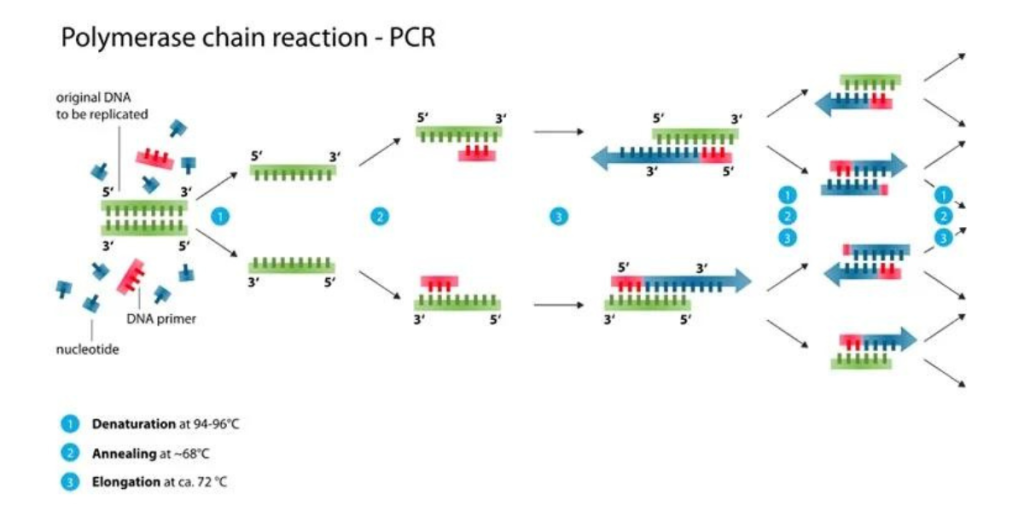
Polymerase Chain Reaction (PCR) stands as a revolutionary technique in molecular biology, providing scientists with the ability to amplify and analyze specific segments of DNA. Conceived by Kary B. Mullis in 1983, PCR has become an indispensable tool in various scientific disciplines, from genetics and medicine to forensic science and environmental research. This comprehensive exploration aims to delve into the principles behind PCR, its diverse applications, the evolution of PCR technology, and the profound impact it has had on advancing scientific understanding and technological innovation.
I. Fundamentals of Polymerase Chain Reaction:
1. DNA Amplification:
PCR serves as a method for exponentially amplifying a specific region of DNA, allowing researchers to generate millions to billions of copies from a minute starting material. This amplification process facilitates the detailed analysis of DNA, enabling the detection of genetic variations, identification of pathogens, and numerous other applications.
2. Components of PCR:
PCR involves a few key components:
- DNA Template: The target DNA segment that needs to be amplified.
- Primers: Short, single-stranded DNA sequences that flank the target region and serve as starting points for DNA synthesis.
- DNA Polymerase: An enzyme responsible for synthesizing new DNA strands by adding nucleotides complementary to the template DNA.
- Nucleotides: Building blocks (adenine, thymine, cytosine, guanine) required for DNA synthesis.
- Buffer Solution: Maintains optimal conditions for the enzymatic activity of DNA polymerase.
3. PCR Cycling:
PCR involves a series of temperature cycles, typically comprising three steps:
- Denaturation: The DNA template is heated to a high temperature, causing the double-stranded DNA to separate into single strands.
- Annealing: The temperature is lowered, allowing the primers to bind to their complementary sequences on the separated DNA strands.
- Extension: The temperature is raised, and DNA polymerase synthesizes new DNA strands using the primers as templates.
II. Evolution of PCR Technology:
1. Conventional PCR:
The early years of PCR were marked by conventional PCR, which required manual temperature changes between each cycle. This labor-intensive process laid the groundwork for subsequent developments in PCR technology.
2. Thermal Cyclers:
The introduction of thermal cyclers, automated machines capable of precisely controlling temperature cycles, revolutionized PCR. These instruments allowed for more efficient and reproducible amplification, reducing the risk of contamination and human error.
3. Real-Time PCR:
Real-Time PCR, also known as quantitative PCR (qPCR), introduced the capability to monitor DNA amplification in real-time. Fluorescent dyes or probes are used to detect the accumulation of amplified DNA during each cycle, enabling quantification of the initial DNA template.
4. Reverse Transcription PCR (RT-PCR):
RT-PCR combines PCR with reverse transcription, allowing the amplification of RNA. This technique is crucial for studying gene expression, viral infections, and various other biological processes involving RNA.
5. Nested PCR:
Nested PCR involves two rounds of amplification, with the second set of primers targeting a specific region within the product of the first amplification. This technique enhances specificity and is valuable for detecting low-abundance targets.
III. Applications of PCR:
1. DNA Cloning:
PCR is a fundamental tool in DNA cloning, enabling the amplification of specific DNA fragments for subsequent insertion into vectors. Cloned DNA can be used for various purposes, including gene expression studies and the production of recombinant proteins.
2. Genetic Testing:
PCR plays a pivotal role in genetic testing, allowing the detection of specific genetic variations associated with inherited disorders, susceptibility to diseases, and other genetic traits. It is employed in diagnostic laboratories and genetic counseling.
3. Forensic Science:
PCR is a cornerstone of forensic DNA analysis, where minute amounts of DNA found at crime scenes can be amplified and analyzed. This application is instrumental in criminal investigations, paternity testing, and identifying human remains.
4. Infectious Disease Diagnosis:
PCR is widely used in the diagnosis of infectious diseases. By amplifying the DNA or RNA of pathogens, PCR enables the rapid and sensitive detection of viruses, bacteria, and other microorganisms. It is crucial for early and accurate diagnosis.
5. Environmental Monitoring:
PCR is employed in environmental research to detect and quantify microorganisms in various ecosystems. This includes studies on microbial diversity, monitoring water quality, and assessing the impact of environmental changes on ecosystems.
6. Archaeology and Anthropology:
PCR has found applications in archaeology and anthropology, where ancient DNA can be amplified and analyzed to study the genetic relationships between ancient populations, track migrations, and unravel the evolutionary history of species.
IV. Challenges and Innovations in PCR:
1. Contamination:
PCR is susceptible to contamination, as even minute amounts of DNA can lead to false-positive results. Rigorous laboratory practices, the use of dedicated equipment, and the inclusion of negative controls are employed to address this challenge.
2. Multiplex PCR:
Multiplex PCR allows the simultaneous amplification of multiple target DNA sequences in a single reaction. This technique has expanded the capabilities of PCR, enabling the detection of multiple targets in a single assay.
3. Isothermal PCR:
Isothermal PCR eliminates the need for thermal cycling by maintaining a constant temperature throughout the reaction. This innovation simplifies instrument requirements and can be advantageous in resource-limited settings.
4. Digital PCR:
Digital PCR partitions the PCR reaction into thousands of individual reactions, allowing the absolute quantification of DNA targets. This technology provides increased precision in quantification compared to traditional real-time PCR.
V. Future Directions in PCR Technology:
1. CRISPR-Cas Systems in PCR:
The integration of CRISPR-Cas systems with PCR technology offers exciting possibilities. CRISPR-based methods, such as CRISPR-Cas12 and CRISPR-Cas13, enable precise DNA and RNA detection, expanding the capabilities of PCR.
2. Single-Cell PCR:
Single-cell PCR techniques are emerging to study individual cells, allowing for the analysis of heterogeneity within cell populations. This technology has implications in cancer research, developmental biology, and understanding complex cellular processes.
3. Point-of-Care PCR:
Advancements in miniaturization and portability are paving the way for point-of-care PCR devices. These handheld instruments have the potential to bring PCR technology to remote or resource-limited settings, facilitating rapid diagnostics.
VI. PCR FAQs:
Q1: What is the difference between PCR and qPCR?
A1: PCR (Poly
merase Chain Reaction) is a technique for amplifying DNA, while qPCR (Quantitative PCR or Real-Time PCR) is a variation that allows the quantification of DNA in real-time during the amplification process.
Q2: Can PCR be used to amplify RNA?
A2: Yes, reverse transcription PCR (RT-PCR) is a technique that combines PCR with reverse transcription to amplify RNA. It is commonly used for studying gene expression and detecting RNA viruses.
Q3: How long does a PCR reaction take?
A3: The duration of a PCR reaction varies depending on the specific protocol and the target DNA fragment. Conventional PCR typically takes a few hours, while real-time PCR can provide results in a shorter timeframe.
Q4: What is the role of primers in PCR?
A4: Primers are short, single-stranded DNA sequences that serve as starting points for DNA synthesis during PCR. They anneal to the complementary sequences on the target DNA, initiating the amplification process.
Q5: How sensitive is PCR in detecting DNA?
A5: PCR is highly sensitive and can detect very low concentrations of DNA. This sensitivity is advantageous in applications such as forensic DNA analysis and the detection of pathogens in clinical samples.
Q6: What is the significance of PCR in genetic testing?
A6: PCR is crucial in genetic testing as it allows the amplification and analysis of specific DNA regions associated with genetic traits, disorders, or disease susceptibility. This information is valuable for diagnosis and personalized medicine.
Q7: How is contamination addressed in PCR?
A7: Contamination in PCR is addressed through rigorous laboratory practices, including the use of dedicated equipment for pre- and post-PCR steps, proper disposal of disposable materials, and the inclusion of negative controls in each experiment.
Q8: Can PCR be used for whole-genome amplification?
A8: While PCR can be used for targeted amplification of specific genomic regions, whole-genome amplification (WGA) techniques are specifically designed to amplify entire genomes. WGA methods may include PCR steps but aim to amplify the entire genomic DNA content.
Conclusion:
Polymerase Chain Reaction has transformed molecular biology, providing researchers and scientists with a powerful tool to dissect and analyze the intricacies of DNA. From its humble beginnings in the 1980s to the diverse applications and innovations witnessed today, PCR continues to be at the forefront of scientific discovery. As technology evolves and new applications emerge, the impact of PCR on genetics, medicine, forensics, and various scientific fields is set to expand, reaffirming its status as a cornerstone technology in the world of molecular biology.
Related link: Science in Health


