







Nebulae: Cosmic Clouds of Creation and Beauty 2024
Introduction:
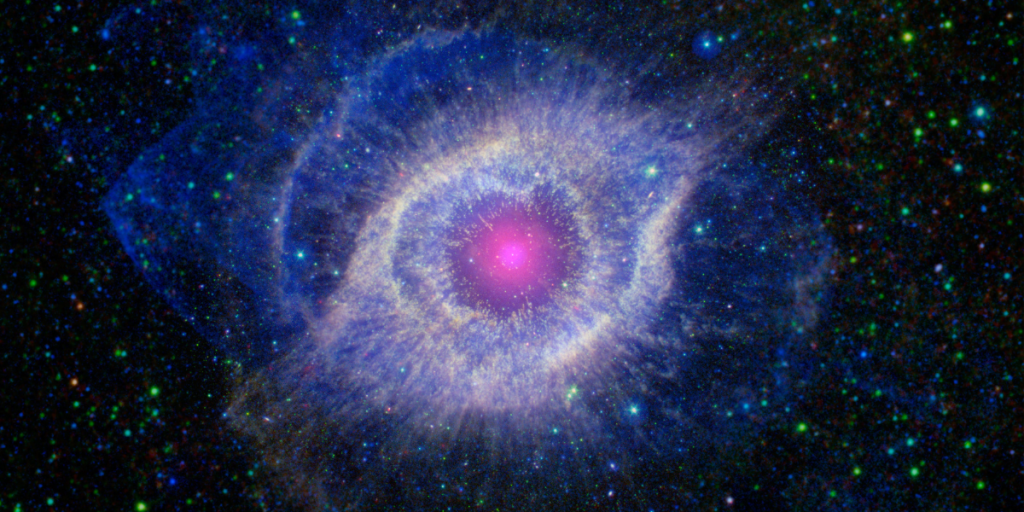
In the vast canvas of the universe, nebulae stand as ethereal clouds of gas and dust, captivating astronomers and stargazers alike. These cosmic wonders, often called the “stellar nurseries,” serve as birthplaces for stars and planetary systems. In this comprehensive exploration, we will delve into the various types of nebulae, their formation, the role they play in the lifecycle of stars, and the mesmerizing beauty that makes them celestial spectacles.
I. What are Nebulae?
1. Definition:
Nebulae (singular: nebula) are vast, interstellar clouds of gas and dust scattered throughout the cosmos. They come in diverse shapes and sizes, each offering a unique glimpse into the cosmic processes of stellar birth and death.
2. Types of Nebulae:
Nebulae are broadly categorized into three main types:
a. Emission Nebulae:
- Characteristics: Glowing clouds of ionized gas, primarily hydrogen, that emit light of various colors.
- Examples: The Orion Nebula (M42), the Lagoon Nebula (M8).
b. Reflection Nebulae:
- Characteristics: Non-ionized gas and dust reflecting the light of nearby stars, often appearing blue.
- Examples: The Pleiades reflection nebula (M45), the Witch Head Nebula.
c. Dark Nebulae:
- Characteristics: Dense clouds of gas and dust that obscure the light from background stars and nebulae.
- Examples: The Horsehead Nebula (B33), the Pipe Nebula.
II. Formation of Nebulae:
1. Molecular Clouds:
The journey of nebulae begins within colossal molecular clouds—dense regions of interstellar space primarily composed of molecular hydrogen. These clouds serve as the cosmic cradles for the birth of new stars.
2. Gravitational Collapse:
Under the influence of gravity or external triggers such as shockwaves from supernovae, regions within molecular clouds undergo gravitational collapse. This collapse initiates the formation of protostars and dense cores within the molecular cloud.
3. Protostars and Stellar Winds:
Within these collapsing regions, protostars form, surrounded by disks of gas and dust. As these protostars evolve, they unleash powerful stellar winds that sweep away the surrounding material, creating cavities in the molecular cloud.
4. Illumination and Ionization:
The intense radiation from young, hot stars within or near the nebula can illuminate and ionize the remaining gas, giving rise to the vibrant hues observed in emission nebulae. The illuminated gas emits light characteristic of its composition, creating stunning cosmic vistas.
5. Star Formation:
Embedded within nebulae are regions where star formation actively takes place. Clusters of stars emerge from the gas and dust, and their combined energy shapes the surrounding nebular material.
III. Types of Nebulae Explored:
1. Emission Nebulae:
a. The Orion Nebula (M42):
The Orion Nebula, located in the Orion constellation, is one of the brightest and most studied emission nebulae. It is a stellar nursery hosting young stars, protostars, and proplyds (protoplanetary disks). The nebula’s intense radiation ionizes the surrounding hydrogen gas, causing it to emit the characteristic red glow.
b. The Lagoon Nebula (M8):
Situated in the constellation Sagittarius, the Lagoon Nebula is a vast emission nebula with a distinctive “lagoon” shape. It harbors young star clusters and is punctuated by dark lanes of dust. The nebula’s central region features a star-forming region known as the Hourglass Nebula.
2. Reflection Nebulae:
a. The Pleiades (M45):
The Pleiades, also known as the Seven Sisters, is an open star cluster surrounded by a reflection nebula. The blue glow of the nebula results from the scattering of starlight by interstellar dust. The Pleiades is a prominent cluster in the Taurus constellation and is easily visible to the naked eye.
b. The Witch Head Nebula:
Located in the Eridanus constellation, the Witch Head Nebula is a reflection nebula illuminated by the nearby supergiant star Rigel. The nebula’s intricate shape resembles the profile of a witch’s head, adding to its allure.
3. Dark Nebulae:
a. The Horsehead Nebula (B33):
A famous dark nebula in the Orion Molecular Cloud Complex, the Horsehead Nebula is a silhouette against the bright emission nebula IC 434. Its distinctive shape resembles a horse’s head and neck, making it a popular target for amateur astronomers.
b. The Pipe Nebula:
Situated in the Ophiuchus constellation, the Pipe Nebula is a large dark nebula that obstructs the light from background stars. It is part of the same molecular cloud complex as the more famous Rho Ophiuchi cloud.
IV. Nebulae as Stellar Nurseries:
1. Birth of Stars:
Nebulae play a crucial role in the formation of stars. Within these cosmic clouds, the gravitational collapse of molecular gas and dust gives rise to protostars. As these protostars gather mass from their surrounding material, nuclear fusion ignites, marking the birth of a new star.
2. Protoplanetary Disks:
Surrounding young stars within nebulae are protoplanetary disks—flat, rotating disks of gas and dust. These disks are the building blocks of planetary systems, as they give rise to planets, moons, and other celestial bodies through accretion and collisions.
3. Stellar Clusters:
Nebulae often host stellar clusters, where groups of stars form simultaneously from the same molecular cloud. These clusters can range from loose associations to densely packed groups, and their members share a common origin within the nebula.
V. The Beauty of Nebulae:
1. Aesthetic Appeal:
Nebulae, with their vibrant colors and intricate structures, hold immense aesthetic appeal. They serve as celestial canvases that inspire both amateur and professional astronomers, photographers, and artists.
2. Hubble’s Contribution:
The Hubble Space Telescope has been instrumental in capturing stunning images of nebulae, revealing intricate details and providing valuable insights into the processes shaping these cosmic clouds. Hubble’s observations have deepened our understanding of nebulae across the universe.
3. Cultural Significance:
Nebulae have captivated human imagination throughout history. They feature prominently in cultural narratives, mythology, and literature, symbolizing the cosmic forces that shape the universe.
VI. Nebulae FAQs:
Q1: Can nebulae be seen with the naked eye?
A1: Yes, some nebulae are visible to the naked eye, particularly those with sufficient brightness and proximity. Examples include the Orion Nebula and the Pleiades.
Q2: How are nebulae different from galaxies?
A2: Nebulae and galaxies are distinct celestial objects. Nebulae are clouds of gas and dust within a galaxy, often associated with star formation.
Galaxies, on the other hand, are vast systems containing stars, gas, dust, and dark matter.
Q3: Can nebulae disappear or change over time?
A3: Nebulae evolve over cosmic timescales due to the birth and death of stars within them. While individual stars within a nebula can alter its appearance, the overall structure of a nebula changes gradually over millions of years.
Q4: What causes the vibrant colors in emission nebulae?
A4: The vibrant colors in emission nebulae result from the ionization of gas by nearby hot stars. Each element emits light at specific wavelengths when ionized, producing characteristic colors. For example, ionized hydrogen emits red light.
Q5: Are there famous nebulae beyond our galaxy?
A5: Yes, several famous nebulae exist beyond our Milky Way galaxy. The Tarantula Nebula in the Large Magellanic Cloud and the Triangulum Galaxy’s star-forming regions are notable examples.
Q6: How do astronomers study nebulae?
A6: Astronomers study nebulae using various tools, including telescopes that capture different wavelengths of light, such as optical, infrared, and radio. Space telescopes like Hubble provide detailed images, while spectroscopy reveals the composition of nebular gas.
Q7: Can nebulae collide with each other?
A7: Nebulae themselves do not collide, as they are diffuse clouds of gas and dust. However, the stars within a nebula can gravitationally interact and, over time, may merge or form new structures.
Q8: What is the most massive nebula known?
A8: The Carina Nebula is one of the most massive and luminous nebulae known. It is located in the Carina constellation and is a region of intense star formation.
Conclusion:
Nebulae, with their cosmic ballet of gas and dust, provide a window into the dynamic and awe-inspiring processes shaping the universe. From stellar nurseries nurturing the birth of stars to the breathtaking beauty captured by telescopes like Hubble, nebulae continue to spark curiosity and wonder. As astronomers delve deeper into the cosmos, each observation of a nebula unveils new insights, fostering a profound appreciation for the intricate tapestry of the cosmos.
Related link: Cosmology


