







Telescopes in Advancing Physics 2024
Introduction:
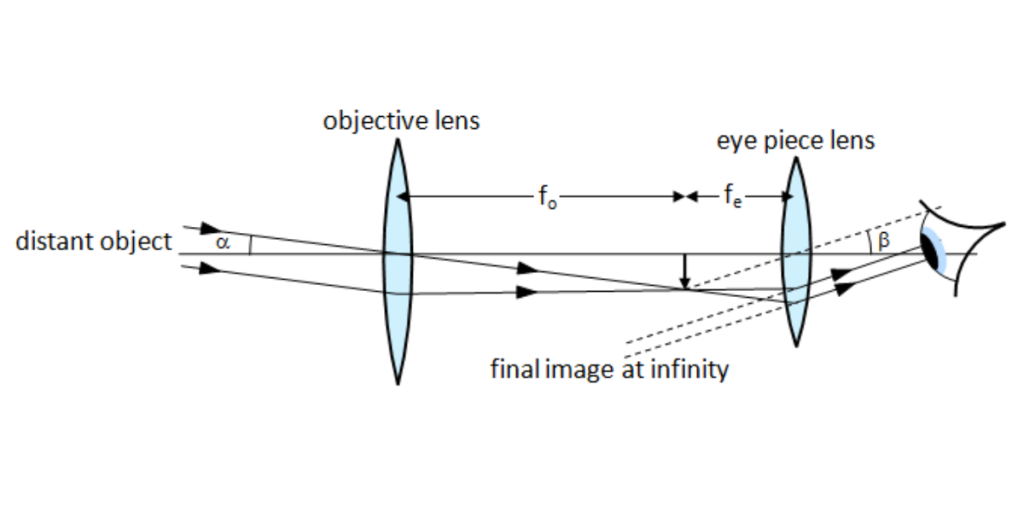
Telescopes, the powerful instruments that extend our vision beyond the confines of the naked eye, have been instrumental in revolutionizing our understanding of the universe. In the realm of physics, telescopes play a pivotal role in observing celestial phenomena, studying distant galaxies, and exploring the fundamental nature of the cosmos. In this comprehensive guide, we will delve into the principles of telescopes, their applications in physics, and the profound impact they have on our quest to unravel the mysteries of the cosmos.
I. Understanding Telescopes:
1. Principles of Telescopes:
- Gathering Light: Telescopes collect and concentrate light, enabling the observation of faint celestial objects.
- Magnification: Optical systems within telescopes magnify the images of distant objects.
2. Types of Telescopes:
- Refracting Telescopes: Use lenses to bend and focus light, like the classic design of a Galilean or Keplerian telescope.
- Reflecting Telescopes: Employ mirrors to gather and focus light, as exemplified by Newtonian and Cassegrain telescopes.
- Compound Telescopes: Combine lenses and mirrors for enhanced optical performance, such as Schmidt-Cassegrain telescopes.
3. Observational Techniques:
- Visible Light Observations: Telescopes observe the visible light spectrum to capture images of celestial objects.
- Radio Telescopes: Detect radio waves emitted by astronomical sources, providing insights into non-visible wavelengths.
II. Applications of Telescopes in Physics:
1. Cosmology and Astrophysics:
- Galactic Surveys: Telescopes survey large areas of the sky to study the distribution and characteristics of galaxies.
- Exoplanet Observations: Detecting and characterizing planets beyond our solar system using transit and radial velocity methods.
2. Stellar Astrophysics:
- Stellar Spectroscopy: Telescopes analyze the spectra of stars, revealing information about their composition, temperature, and motion.
- Stellar Variability Studies: Monitoring changes in the brightness of stars to understand their lifecycle and behavior.
3. High-Energy Astrophysics:
- Gamma-Ray Observations: Telescopes detect gamma-ray emissions from high-energy astrophysical sources, such as supernovae and active galactic nuclei.
- X-ray Telescopes: Observe X-rays emitted by celestial objects, providing insights into black holes, neutron stars, and high-energy phenomena.
4. Cosmic Microwave Background (CMB) Studies:
- Mapping the CMB: Telescopes observe the faint radiation left over from the Big Bang, mapping the cosmic microwave background to study the early universe.
- Polarization Measurements: Analyzing the polarization of CMB radiation for information about the universe’s evolution.
III. Telescopes in Particle Physics:
1. Observations of Cosmic Rays:
- Cherenkov Telescopes: Detect the Cherenkov radiation produced by cosmic-ray particles interacting with Earth’s atmosphere.
- Extensive Air Shower Arrays: Arrays of telescopes observe the cascade of particles created by high-energy cosmic rays.
2. Neutrino Detection:
- Neutrino Telescopes: Instruments designed to detect neutrinos, elusive subatomic particles, by observing their interactions with matter.
- IceCube Neutrino Observatory: Located in Antarctica, IceCube detects high-energy neutrinos through their interactions with the ice.
IV. Advancements in Telescope Technology:
1. Space Telescopes:
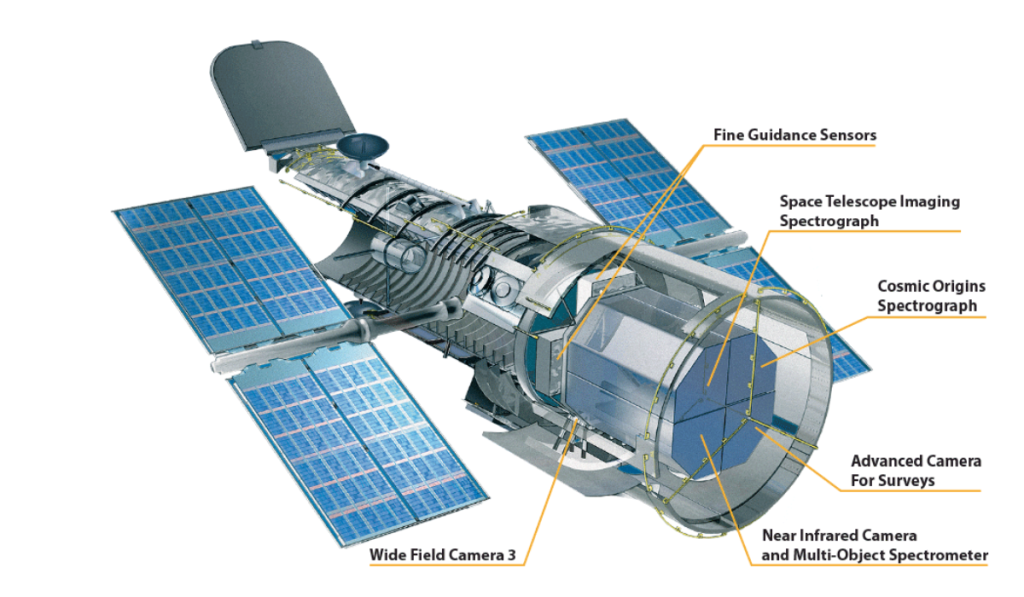
- Hubble Space Telescope: Positioned above Earth’s atmosphere, Hubble provides unparalleled views of distant galaxies and nebulae.
- James Webb Space Telescope: Set to launch, JWST will observe in the infrared spectrum, unveiling the early universe and exoplanet atmospheres.
2. Adaptive Optics:
- Compensating for Atmospheric Disturbances: Adaptive optics systems adjust telescope mirrors in real-time to counteract the blurring effects of Earth’s atmosphere.
- Sharper Image Resolution: Enhancing the sharpness of astronomical images, particularly in ground-based observatories.
3. Interferometry:
- Combining Signals from Multiple Telescopes: Interferometric arrays link signals from multiple telescopes to create a virtual telescope with increased resolution.
- Very Long Baseline Interferometry (VLBI): Utilizing telescopes across large distances to achieve ultra-high resolutions.
V. Challenges and Considerations in Telescope Physics:
1. Observational Limitations:
- Atmospheric Distortions: Earth’s atmosphere introduces distortions that can impact the quality of observations.
- Light Pollution: Urban and artificial lights can hinder observations, leading to reduced visibility for ground-based telescopes.
2. Technological Challenges:
- Maintaining Space Telescopes: Space-based telescopes face challenges in terms of maintenance and repair.
- Data Handling: The massive amount of data generated by modern telescopes requires advanced processing and storage capabilities.
VI. Frequently Asked Questions (FAQs) about Telescopes in Physics:
Q1: How do telescopes contribute to the study of exoplanets?
A1: Telescopes contribute to exoplanet studies by detecting and characterizing planets beyond our solar system. They use various techniques, including the transit method, to observe changes in a star’s brightness caused by orbiting exoplanets.
Q2: What is the significance of telescopes in cosmology?
A2: Telescopes play a crucial role in cosmology by observing the large-scale structure of the universe, studying galaxies, and mapping the cosmic microwave background. They provide valuable data for understanding the origin and evolution of the cosmos.
Q3: How do Cherenkov telescopes contribute to particle physics?
A3: Cherenkov telescopes detect the Cherenkov radiation produced when high-energy cosmic-ray particles interact with Earth’s atmosphere. These telescopes help scientists study cosmic rays and explore the high-energy processes occurring in the universe.
Q4: What are the advantages of space telescopes like Hubble and James Webb?
A4: Space telescopes like Hubble and James Webb offer distinct advantages over ground-based telescopes. They avoid atmospheric distortions, providing clearer observations. Additionally, they can observe in wavelengths that are absorbed by
Earth’s atmosphere, such as infrared light.
Q5: How do telescopes contribute to our understanding of stellar evolution?
A5: Telescopes contribute to stellar astrophysics by observing the spectra and brightness variations of stars. These observations help astronomers understand the life cycles of stars, including their formation, fusion processes, and eventual evolution.
Q6: What is adaptive optics, and how does it improve telescope observations?
A6: Adaptive optics is a technology that compensates for atmospheric distortions in telescope observations. It involves real-time adjustments of the telescope’s mirrors to counteract the blurring effects of Earth’s atmosphere, resulting in sharper and more detailed images.
Q7: Can telescopes observe beyond the visible light spectrum?
A7: Yes, telescopes can observe beyond the visible light spectrum. Instruments like radio telescopes and X-ray telescopes are designed to detect non-visible wavelengths, providing insights into different astrophysical phenomena.
Q8: How do telescopes contribute to our understanding of dark matter and dark energy?
A8: Telescopes contribute to the study of dark matter and dark energy by observing the large-scale structure of the universe and analyzing the distribution of galaxies. These observations help astronomers infer the presence and influence of dark matter and dark energy.
Conclusion:
Telescopes, marvels of scientific ingenuity, continue to shape our understanding of the cosmos and unravel the profound mysteries of the universe. From the observatories on Earth to space-based telescopes peering into the depths of space, these instruments provide a window into the vastness and complexity of the cosmos. As technology advances and new generations of telescopes emerge, our ability to explore the universe expands, promising further revelations about the nature of dark matter, the origins of galaxies, and the conditions that govern the fabric of spacetime. In the journey of cosmic exploration, telescopes stand as our steadfast companions, guiding us through the vast expanse of the cosmos and inspiring generations of astronomers and physicists to reach for the stars.
Related link: Centrifugal Forces


