







Exoplanets the Mysteries Beyond: A Deep Dive into Exoplanets 2024
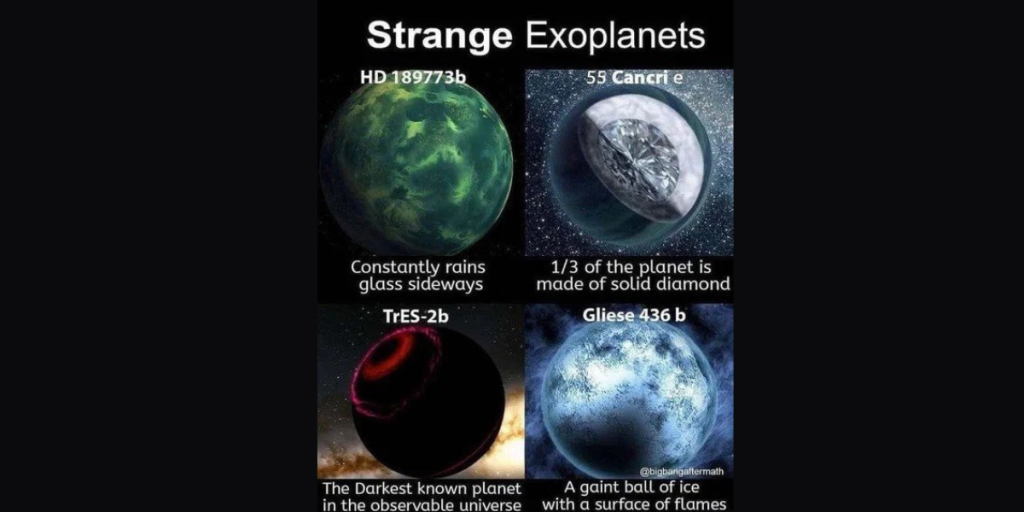
The Exoplanets universe, with its vast expanse and uncharted territories, has long captivated human imagination. In the quest to understand our place in the cosmos, one fascinating frontier has emerged – exoplanets. This comprehensive exploration delves into the intricacies of exoplanets, their discovery, characteristics, potential for habitability, and the profound impact they have on our understanding of the cosmos.
Unraveling the Enigma of Exoplanets:
1. Defining Exoplanets:
- Exoplanets, short for extrasolar planets, are planets located outside our solar system.
- They orbit stars other than the Sun, and their discovery has reshaped our understanding of planetary systems in the universe.
2. Historical Context:
- The idea of planets beyond our solar system dates back centuries, but systematic searches began in the late 20th century.
- Advances in technology, such as space telescopes and precision instruments, have revolutionized the detection of exoplanets.
3. Methods of Detection:
- Transit Method: Observing the slight dimming of a star as an exoplanet passes in front of it.
- Radial Velocity Method: Detecting the wobble of a star caused by the gravitational pull of an orbiting exoplanet.
- Direct Imaging: Capturing images of exoplanets, though challenging due to the brightness of their host stars.
The Diversity of Exoplanets:
4. Hot Jupiters and Ice Giants:
- Some exoplanets resemble our solar system’s gas giants, while others exhibit characteristics of ice giants like Uranus and Neptune.
- Hot Jupiters, large gas giants close to their host stars, defy the patterns observed in our solar system.
5. Super-Earths and Mini-Neptunes:
- Super-Earths are rocky planets with masses larger than Earth but smaller than Uranus or Neptune.
- Mini-Neptunes have a composition similar to Uranus or Neptune but are smaller in size.
6. Terrestrial Exoplanets:
- Earth-like exoplanets, with rocky compositions and potential for liquid water, are of particular interest in the search for habitable worlds.
- Kepler-186f, located in its star’s habitable zone, is an example of a potentially Earth-like exoplanet.
7. Exotic Varieties:
- Exoplanets come in various forms, including rogue planets that wander through space without orbiting a star.
- Pulsar planets orbit pulsars, dense remnants of massive stars, under extreme conditions.
Characteristics and Habitability:

8. Habitability Factors:
- The habitable zone, or Goldilocks zone, is the region around a star where conditions may allow for the existence of liquid water.
- Factors influencing habitability include the planet’s size, atmosphere, and distance from its host star.
9. Atmospheric Composition:
- Exoplanet atmospheres play a crucial role in determining their habitability.
- Spectroscopy enables scientists to analyze the composition of exoplanet atmospheres, providing insights into potential habitability.
10. Exoplanet Climate:
- The climate of an exoplanet is influenced by factors such as its orbit, rotation, and atmospheric conditions.
- Understanding exoplanet climates helps researchers assess the likelihood of supporting life.
11. Potential for Life:
- While habitability is a key consideration, the search for extraterrestrial life focuses on biosignatures – signs of life, such as specific gases, in exoplanet atmospheres.
- The discovery of a potentially habitable exoplanet with biosignatures would have profound implications for astrobiology.
Impact on Astrophysics and Cosmology:
12. Revisiting Our Understanding:
- The discovery of exoplanets challenges previous assumptions about the prevalence and diversity of planetary systems.
- It prompts a reevaluation of our understanding of planet formation and the conditions necessary for life.
13. Technological Advancements:
- The pursuit of exoplanet research has driven technological advancements in observational tools, including space telescopes and high-precision instruments.
- Innovative methods, such as the transit method, have become powerful tools in the exoplanet hunter’s toolkit.
14. Exoplanets and the Search for Extraterrestrial Intelligence (SETI):
- Exoplanets in the habitable zone are prime targets in the search for extraterrestrial intelligence.
- SETI initiatives explore the possibility of detecting signals from advanced civilizations on exoplanets.
Getting to Know Notable Exoplanets:
15. Kepler-186f:
- Discovered by NASA’s Kepler spacecraft, Kepler-186f is a potentially Earth-like exoplanet orbiting a red dwarf star.
- It resides in the habitable zone, making it a tantalizing target for further study.
16. TRAPPIST-1 System:
- The TRAPPIST-1 system gained attention for hosting seven Earth-sized exoplanets, three of which are within the habitable zone.
- The proximity of these planets makes them intriguing candidates for atmospheric studies.
17. HD 209458 b (Osiris):
- Osiris, a hot Jupiter, was the first exoplanet to have its atmosphere directly detected.
- Spectroscopic observations revealed the presence of elements like sodium and water vapor.
The Future of Exoplanet Exploration:
18. James Webb Space Telescope (JWST):
- Scheduled for launch, JWST is poised to revolutionize exoplanet research with its advanced capabilities.
- It will enable detailed observations of exoplanet atmospheres, providing unprecedented insights.
19. Next-Generation Instruments:
- Ongoing developments in observational instruments, both ground-based and space-based, promise to enhance our ability to characterize exoplanets.
- Advancements in precision spectroscopy and direct imaging techniques are on the horizon.
20. The Quest for Life Beyond Earth:
- Exoplanet research is intricately linked to the quest for life beyond Earth.
- Future missions, such as the search for biosignatures and the study of potentially habitable exoplanets, aim to answer the age-old question of whether we are alone in the universe.
Frequently Asked Questions (FAQs):
Q1: How many exoplanets have been discovered so far?
A1: As of the latest data, thousands of exoplanets have been discovered. The count continues to grow as observational techniques improve and new missions are launched.
Q2: Can exoplanets support life?
A2: The potential for exoplanets to support life depends on various factors, including their distance from their host stars, composition, and atmospheric conditions. The search for habitable exoplanets is a key focus in astrobiology.
Q3: How do scientists determine the atmosphere of an exoplanet?
A3: Scientists use spectroscopy to analyze the light passing through an exoplanet’s atmosphere
during a transit. This method reveals the chemical composition of the atmosphere, including any potential biosignatures.
Q4: What is the significance of the habitable zone?
A4: The habitable zone, or Goldilocks zone, is the region around a star where conditions may be suitable for liquid water to exist. It is a key factor in assessing the potential habitability of exoplanets.
Q5: Will future missions provide more detailed information about exoplanets?
A5: Yes, upcoming missions, such as the James Webb Space Telescope (JWST), are designed to provide more detailed information about exoplanets. JWST, in particular, will enable unprecedented observations of exoplanet atmospheres.
Q6: Can we ever travel to exoplanets?
A6: The vast distances between stars make interstellar travel currently impractical. While the idea of exploring exoplanets is captivating, technological advancements would be required to make such journeys feasible.
Q7: What are biosignatures, and why are they important in exoplanet research?
A7: Biosignatures are signs of life, such as specific gases, that may be present in an exoplanet’s atmosphere. Detecting biosignatures is crucial in the search for extraterrestrial life and understanding the potential habitability of exoplanets.
Q8: How do scientists determine the mass of an exoplanet?
A8: The mass of an exoplanet is often determined using the radial velocity method. The gravitational influence of the planet on its host star causes a measurable wobble in the star’s motion, allowing scientists to infer the planet’s mass.
Q9: Are there missions specifically dedicated to studying exoplanets?
A9: Yes, several missions, such as NASA’s Kepler and TESS (Transiting Exoplanet Survey Satellite), have been dedicated to the discovery and study of exoplanets. The upcoming James Webb Space Telescope will also focus on detailed observations of exoplanet atmospheres.
Q10: What role do citizen scientists play in exoplanet research?
A10: Citizen scientists contribute significantly to exoplanet research by participating in projects that involve data analysis, classification of light curves, and even the discovery of new exoplanets. Platforms like Zooniverse provide opportunities for public engagement in scientific endeavors.
Conclusion:
Exoplanets, with their diverse forms and enigmatic nature, beckon us to explore the cosmos beyond the boundaries of our solar system. From hot Jupiters to potentially habitable Earth-like worlds, each discovery adds a new layer to our understanding of planetary systems in the universe. As technological advancements propel us into the next era of exoplanet research, the quest for life beyond Earth and the unraveling of cosmic mysteries continue to captivate scientists and enthusiasts alike. The exploration of exoplanets stands as a testament to human curiosity, ingenuity, and the relentless pursuit of knowledge in the ever-expanding tapestry of the cosmos.
Related links: Cosmic Tapestry


